
www.waterplant.tech
18
'26
Written on Modified on
Alfa Laval Restores Refinery Belt Press Performance
On-site rebuild cut capital costs while recovering throughput, cake dryness, and operational stability in a demanding wastewater environment.
www.alfalaval.com
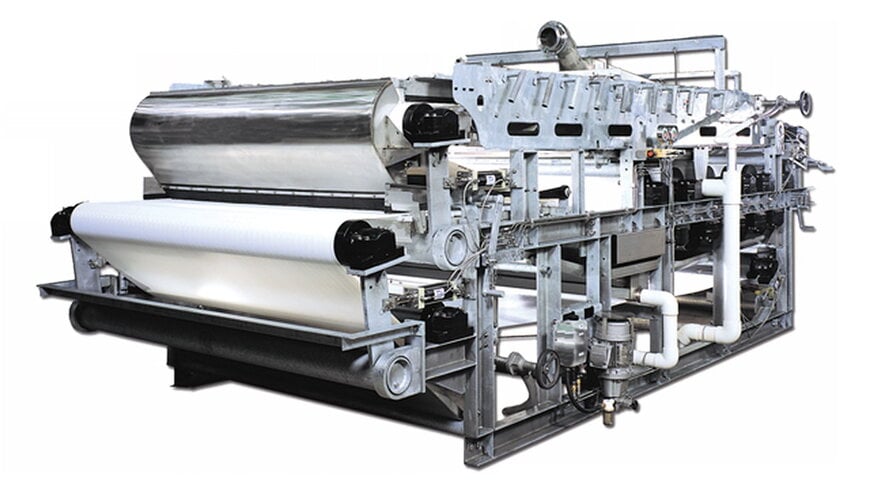
A refinery in the southern United States faced declining efficiency in its wastewater treatment plant. The facility operated two belt filter presses, aged 27 and 32 years respectively, which had begun to show significant mechanical fatigue. In the corrosive and demanding environment of a refinery, the equipment could no longer maintain the required feed rate or consistent cake dryness.
The operational risks were high. If sludge storage reached capacity due to processing delays, the entire manufacturing facility faced potential production bottlenecks. Furthermore, the drop in performance led to an increase in liquid volume in the sludge cake, significantly raising disposal costs and the risk of environmental compliance violations.
Strategic rebuild versus total replacement
Initially, the refinery management considered a complete replacement of the two machines, a standard capital expenditure (CAPEX) approach for equipment of this age. However, after a technical assessment by Alfa Laval wastewater experts, it was determined that the structural integrity of the existing frames remained sound.
The chosen solution was a comprehensive on-site rebuild and process optimization of the existing AS-H belt filter presses. This technical path was selected to address specific mechanical failures—such as belt misalignment, leaking hydraulic seals, and worn bearings—at a fraction of the cost of new procurement.
Deployment and technical support
The restoration process involved a certified field service technician conducting an itemized repair and adjustment program. The technical scope included:
- Replacement of multiple rollers and bearings.
- Installation of new support wear strips under the filter belts.
- Replacement of rubber seals, hydraulic motors, and tensioning/steering cylinders.
- Tuning of steering valves and paddles.
Beyond mechanical repairs, the provider implemented a hands-on training program for refinery operators. This focused on process optimization, enabling the staff to identify and resolve root-cause symptoms before they lead to performance drops or unplanned downtime.
The decision to rebuild rather than replace resulted in immediate financial and operational gains:
The decision to rebuild rather than replace resulted in immediate financial and operational gains:
- Capital Savings: The refinery saved over $200,000 in expenses compared to the cost of purchasing new equipment.
- Performance Recovery: Throughput and cake dryness returned to levels equivalent to those of a new machine.
- Waste Reduction: By restoring cake dryness, the facility reduced the total volume of sludge requiring transport to landfills, leading to ongoing savings in handling fees.
- Reliability: The elimination of unplanned repairs restored the plant's operational balance and secured its environmental compliance status.
