
www.waterplant.tech
06
'26
Written on Modified on
Dynamic Filtration in Water Treatment
Examining the current status, advantages, and limitations of dynamic filtration.
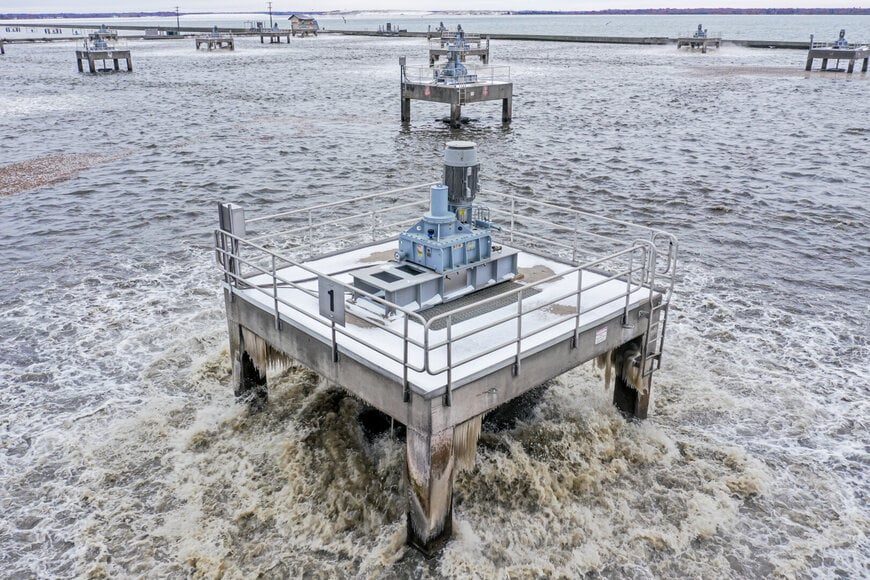
Filtration plays an important role in advanced water & wastewater treatment solutions. Image source: SPX Flow
When it comes to water treatment, filtration is the first and critical step that helps remove impurities like debris, suspended particles, microorganisms and other pollutants before further treatment. However, it may be noted that filtration alone is generally not enough to ensure safe, good-quality water, and a comprehensive water treatment process usually requires a combination of methods – such as coagulation, sedimentation, filtration, and disinfection – to be fully effective.
There are many different types of fluid or liquid filtration methods, depending upon application requirements, materials used and specific techniques. However, there are two fundamental types of filtration processes: Static and Dynamic. Static filtration is a process where the slurry – a mixture of fluid and solid particles – is stationary relative to the filter medium. The filtration in this case happens when the pressure difference forces the liquid through the filter, forming a filter cake that grows thicker over time. On the other hand, in Dynamic filtration, the fluid flows parallel to the filter medium surface (cross-flow filtration), reducing the buildup of a thick, permanent cake. In this case, the motion of the liquid creates high shear, which erodes the cake, allowing for higher, more consistent filtration rates over time.
This article is about dynamic filtration and its many characteristics, advantages and some drawbacks.
Dynamic filtration and its importance
Dynamic filtration in water treatment, also called shear-enhanced filtration, uses mechanical movements like rotation, vibration, or shaking to create high turbulence near the membrane surface. This purposely created relative motion between the fluid and the filter surface reduces fouling, improves the rate of transfer and maintains higher permeate flux. The motion is created with the help of rotating discs, vibrating membranes, or shear-enhancing mechanisms.
Ironically, dynamic filtration – more specifically, mechanically induced dynamic filtration (like vibratory or rotating filters) – was largely considered a specialised or niche technology for a considerable period. High capital cost, complexity in operation and higher energy consumption compared to conventional methods, were the factors cited against dynamic filtration. But driven by advances in fouling mitigation and industrial sustainability requirements, it has regained significant traction in the recent past.
The importance of dynamic filtration is increasing due to a host of converging trends such as:
When it comes to water treatment, filtration is the first and critical step that helps remove impurities like debris, suspended particles, microorganisms and other pollutants before further treatment. However, it may be noted that filtration alone is generally not enough to ensure safe, good-quality water, and a comprehensive water treatment process usually requires a combination of methods – such as coagulation, sedimentation, filtration, and disinfection – to be fully effective.
There are many different types of fluid or liquid filtration methods, depending upon application requirements, materials used and specific techniques. However, there are two fundamental types of filtration processes: Static and Dynamic. Static filtration is a process where the slurry – a mixture of fluid and solid particles – is stationary relative to the filter medium. The filtration in this case happens when the pressure difference forces the liquid through the filter, forming a filter cake that grows thicker over time. On the other hand, in Dynamic filtration, the fluid flows parallel to the filter medium surface (cross-flow filtration), reducing the buildup of a thick, permanent cake. In this case, the motion of the liquid creates high shear, which erodes the cake, allowing for higher, more consistent filtration rates over time.
This article is about dynamic filtration and its many characteristics, advantages and some drawbacks.
Dynamic filtration and its importance
Dynamic filtration in water treatment, also called shear-enhanced filtration, uses mechanical movements like rotation, vibration, or shaking to create high turbulence near the membrane surface. This purposely created relative motion between the fluid and the filter surface reduces fouling, improves the rate of transfer and maintains higher permeate flux. The motion is created with the help of rotating discs, vibrating membranes, or shear-enhancing mechanisms.
Ironically, dynamic filtration – more specifically, mechanically induced dynamic filtration (like vibratory or rotating filters) – was largely considered a specialised or niche technology for a considerable period. High capital cost, complexity in operation and higher energy consumption compared to conventional methods, were the factors cited against dynamic filtration. But driven by advances in fouling mitigation and industrial sustainability requirements, it has regained significant traction in the recent past.
The importance of dynamic filtration is increasing due to a host of converging trends such as:
- rising water reuse mandates in industrial sectors such as power, chemicals, and food processing
- higher contaminant loads, including colloids, oils, and biofouling
- limitations of conventional membranes, particularly fouling and energy inefficiency at high solids concentration, and
- the need for compact, modular systems in decentralised treatment and zero liquid discharge (ZLD) applications.
Dynamic filtration is particularly relevant in applications involving high suspended solids, viscous fluids, or difficult-to-filter streams where conventional crossflow filtration becomes inefficient.
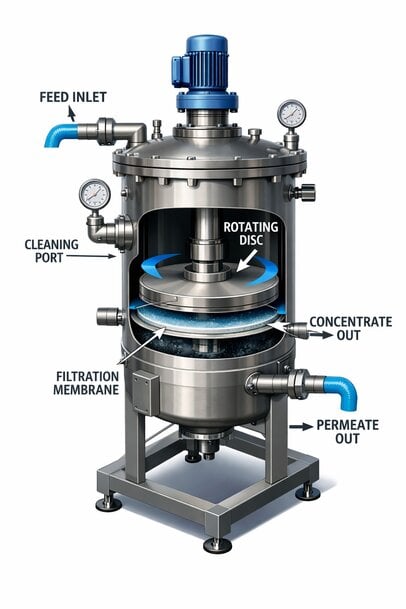
Cut section of a typical dynamic filtration unit (AI generated image).
Key equipment and configurations
There are different types of dynamic filtration systems, based on the mechanism used to create shear at the membrane or filter surface. These are:
1. Rotating disc and rotating membrane systems: These use rotating discs or membranes inside a stationary housing. The shear is generated by centrifugal force and fluid turbulence. This type of units are suitable for high-solids applications (e.g., sludge thickening, industrial effluents).
2. Vibratory shear enhanced processing (VSEP): In this type, membranes are vibrated at high frequency. The oscillatory motion reduces cake layer formation on the surface. These units are effective for scaling-prone streams such as brine concentration.
3. Dynamic crossflow filters: This type utilises internal rotating elements or impellers, which improve crossflow velocity without increasing bulk fluid flow. These units have lower pumping energy compared to conventional crossflow systems.
4. Spinning tube-in-tube systems: In this type of dynamic filtration units, the inner tube rotates to generate shear along the membrane surface. Compact design makes these units suitable for niche industrial applications.
5. Ceramic dynamic filtration units: The highlight of this type of units is they combine dynamic motion with robust ceramic membranes. This in turn enables operation under high temperature, pressure, and aggressive chemical environments.
Major advantages and notable drawbacks
Dynamic filtration offers substantial advantages in energy efficiency, reduced maintenance, and superior process consistency. It provides a robust solution for complex separation challenges, including microalgae harvesting, wastewater treatment, and precise industrial process optimisation. The process offers several performance and operational benefits over static membrane systems:
1. Fouling mitigation: Continuous shear reduces cake buildup and pore blockage, also extends membrane life and reduces cleaning frequency.
2. Higher flux rates: Enhanced mass transfer enables higher permeate flux, which is particularly advantageous for high-viscosity or high-solids feeds.
3. Ability to handle challenging streams: Very effective for oily wastewater, slurries, and biofouling-prone streams where it maintains performance where conventional membranes fail.
4. Reduced pretreatment requirements: Can process feeds with minimal upstream clarification, and reduces CAPEX and footprint for pretreatment systems.
5. Compact system design: Higher efficiency allows smaller system footprint, which makes it suitable for modular and decentralised installations.
6. Improved recovery rates: Higher concentration factors are achievable with dynamic filtration, and the process also supports ZLD and water reuse strategies.
Every system has some inherent advantages, but is not without some disadvantages too, in operation. So it would be interesting to examine some of the drawbacks of dynamic filtration, which impose several limitations on widespread adoption:
1. Higher mechanical complexity: Moving parts (rotors, vibrators) increase system complexity, and calls for skilled maintenance and higher reliability engineering.
2. Increased energy consumption: At least in some configurations, the energy required for rotation or vibration can offset gains from reduced pumping.
3. Higher capital costs: Specialised equipment and materials increase upfront investment, which may not be economically viable for low-load or simple applications.
4. Maintenance and wear: Mechanical components are subject to wear and tear – parts like seals, bearings, and motors require periodic replacement.
5. Scaling limitations: While dynamic filtration is effective for niche and high-value applications, large-scale adoption in municipal corporations and public utilities is limited. Integration into existing treatment trains can be complex
6. Limited standardisation: Diverse designs and lack of standardisation hinder widespread industrial acceptance as vendor-specific technologies dominate the market.
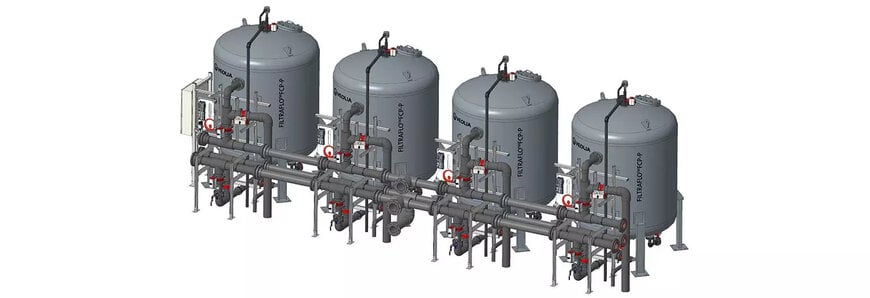
The new generation Filtraflo FCP-P pressure filters. Image source: Veolia Water Technologies
Current market and adoption trends
Dynamic filtration remains a specialised but growing segment of the water treatment market. By no means widespread, industrial adoption is strongest in sectors such as:
Cut section of a typical dynamic filtration unit (AI generated image).
Key equipment and configurations
There are different types of dynamic filtration systems, based on the mechanism used to create shear at the membrane or filter surface. These are:
1. Rotating disc and rotating membrane systems: These use rotating discs or membranes inside a stationary housing. The shear is generated by centrifugal force and fluid turbulence. This type of units are suitable for high-solids applications (e.g., sludge thickening, industrial effluents).
2. Vibratory shear enhanced processing (VSEP): In this type, membranes are vibrated at high frequency. The oscillatory motion reduces cake layer formation on the surface. These units are effective for scaling-prone streams such as brine concentration.
3. Dynamic crossflow filters: This type utilises internal rotating elements or impellers, which improve crossflow velocity without increasing bulk fluid flow. These units have lower pumping energy compared to conventional crossflow systems.
4. Spinning tube-in-tube systems: In this type of dynamic filtration units, the inner tube rotates to generate shear along the membrane surface. Compact design makes these units suitable for niche industrial applications.
5. Ceramic dynamic filtration units: The highlight of this type of units is they combine dynamic motion with robust ceramic membranes. This in turn enables operation under high temperature, pressure, and aggressive chemical environments.
Major advantages and notable drawbacks
Dynamic filtration offers substantial advantages in energy efficiency, reduced maintenance, and superior process consistency. It provides a robust solution for complex separation challenges, including microalgae harvesting, wastewater treatment, and precise industrial process optimisation. The process offers several performance and operational benefits over static membrane systems:
1. Fouling mitigation: Continuous shear reduces cake buildup and pore blockage, also extends membrane life and reduces cleaning frequency.
2. Higher flux rates: Enhanced mass transfer enables higher permeate flux, which is particularly advantageous for high-viscosity or high-solids feeds.
3. Ability to handle challenging streams: Very effective for oily wastewater, slurries, and biofouling-prone streams where it maintains performance where conventional membranes fail.
4. Reduced pretreatment requirements: Can process feeds with minimal upstream clarification, and reduces CAPEX and footprint for pretreatment systems.
5. Compact system design: Higher efficiency allows smaller system footprint, which makes it suitable for modular and decentralised installations.
6. Improved recovery rates: Higher concentration factors are achievable with dynamic filtration, and the process also supports ZLD and water reuse strategies.
Every system has some inherent advantages, but is not without some disadvantages too, in operation. So it would be interesting to examine some of the drawbacks of dynamic filtration, which impose several limitations on widespread adoption:
1. Higher mechanical complexity: Moving parts (rotors, vibrators) increase system complexity, and calls for skilled maintenance and higher reliability engineering.
2. Increased energy consumption: At least in some configurations, the energy required for rotation or vibration can offset gains from reduced pumping.
3. Higher capital costs: Specialised equipment and materials increase upfront investment, which may not be economically viable for low-load or simple applications.
4. Maintenance and wear: Mechanical components are subject to wear and tear – parts like seals, bearings, and motors require periodic replacement.
5. Scaling limitations: While dynamic filtration is effective for niche and high-value applications, large-scale adoption in municipal corporations and public utilities is limited. Integration into existing treatment trains can be complex
6. Limited standardisation: Diverse designs and lack of standardisation hinder widespread industrial acceptance as vendor-specific technologies dominate the market.
The new generation Filtraflo FCP-P pressure filters. Image source: Veolia Water Technologies
Current market and adoption trends
Dynamic filtration remains a specialised but growing segment of the water treatment market. By no means widespread, industrial adoption is strongest in sectors such as:
- Oil & gas (produced water treatment)
- Food & beverage (protein recovery, wastewater reuse)
- Pharmaceuticals and biotech, and
- Mining and metallurgy
Water today is one of the critical areas in the problems the world faces and zero liquid discharge (ZLD) and water reuse projects are key growth drivers for dynamic filtration. ZLD in filtration is an advanced industrial wastewater treatment process that eliminates liquid waste, recovering nearly all water for reuse while producing solid waste (salts/minerals).
Another emerging trend is the increasing integration with digital monitoring and predictive maintenance systems that will help optimise the process. In addition, emergence of hybrid systems combining dynamic filtration with RO or evaporation will further expand the areas of application. However, even then, adoption in mass markets like municipal water treatment is likely to remain limited due to cost sensitivity and scalability concerns.
Top 10 leading vendors in dynamic filtration
Dynamic filtration remains a high-performance niche technology, with vendor dominance driven more by proprietary designs and application expertise than by scale alone. The vendor landscape is a mix of pure-play dynamic filtration specialists; separation technology companies with dynamic filtration portfolios; and OEM/system integrators offering hybrid solutions. The Top 10 include:
1. New Logic Research (USA): a market leader in vibratory dynamic filtration with benchmark technology, the company is known for its Vibratory Shear Enhanced Processing (VSEP) technology. As a global pioneer and most recognised pure-play dynamic filtration provider, it uses high-frequency membrane vibration to prevent fouling and maintain high flux, with a strong presence in: industrial wastewater, landfill leachate, and oil & gas produced water.
2. Alfa Laval (Sweden): a leading engineering player with dynamic filtration integrated into a broader separation portfolio, the company specialises in rotating membrane filtration, and high-shear separation. It has expertise in disc stack separators and dynamic filtration modules, with a strong footprint in food, biotech, and industrial separation.
3. GEA Group (Germany): with a strong in process industries that use dynamic filtration in high-value applications, GEA specialises in dynamic crossflow filtration, and rotating filtration systems. These technologies offer high-shear membrane filtration for viscous streams used mainly in food, dairy, pharma, and biotech sectors.
4. Pall Corporation (USA): Though not a purely dynamic filtration-focused company, it is a major innovation leader in advanced filtration. Technologies include advanced membrane systems including dynamic modules, with strong R&D in fouling-resistant and high-performance filtration systems. Applications in biotech, pharmaceuticals, and industrial water segments.
5. SPX FLOW (USA): known for strong engineering capability in rotating equipment relevant to dynamic filtration, with applications in food & beverage, wastewater and industrial processing. Relevant technologies are rotating filtration systems and shear-enhanced separation.
6. Veolia Water Technologies (France): a system integrator leveraging dynamic filtration within large-scale water solutions, VWT boasts of hybrid membrane systems including dynamic filtration integrations and has a strong presence in ZLD and industrial water reuse, with focus on combining dynamic filtration with RO/evaporation.
7. SUEZ Water Technologies & Solutions (France/USA): an indirect player, the company incorporates dynamic principles within advanced membrane platforms. It develops advanced membrane systems with fouling mitigation enhancements, with increasing focus on high-recovery and difficult wastewater streams.
8. Koch Separation Solutions (USA): with known strength in industrial separations with selective use of dynamic filtration, the company offers high-performance crossflow and specialty membrane systems. It is engaged in providing solutions in dynamic and shear-enhanced filtration applications for industrial streams.
9. Andritz Separation (Austria): with a combination of mechanical and membrane separation, including dynamic approaches, the company’s focus is on mining, pulp & paper, wastewater industries. The product portfolio includes: dynamic filtration, decanter centrifuges and membrane systems.
10. Techno Alpha (Japan): a regional specialist enabling adoption of dynamic filtration technologies, the company supplies vibratory membrane filtration systems (VSEP-type technologies), and acts as a technology integrator and distributor in Asia.
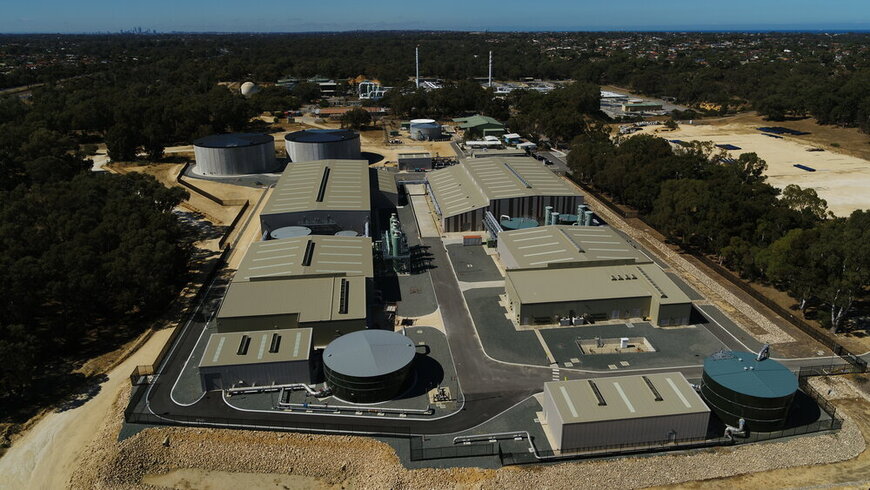
A water recycling plant in Perth, Australia. Image source: SUEZ/Water Corporation of Western Australia
Conclusion
The preceding paragraphs make it obvious that dynamic filtration today represents a technically robust solution for addressing some of the most persistent challenges in water treatment – particularly fouling, high solids handling, and process efficiency under difficult conditions. While it offers clear advantages in specialised industrial applications, its broader adoption is constrained by higher capital costs, mechanical complexity, and energy considerations.
In comparison with conventional filtration and separation technologies, dynamic filtration occupies a strategic niche: it is not a universal replacement but a high-performance alternative for demanding applications where traditional systems fall short.
As industries move toward water reuse, ZLD, and sustainability-driven operations, dynamic filtration is expected to play an increasingly important role – especially when integrated into hybrid and digitally optimised smart water treatment architectures.
Article contributed by Milton D’Silva, a freelance technical writer, and former editor of Industrial Products Finder, India.
Another emerging trend is the increasing integration with digital monitoring and predictive maintenance systems that will help optimise the process. In addition, emergence of hybrid systems combining dynamic filtration with RO or evaporation will further expand the areas of application. However, even then, adoption in mass markets like municipal water treatment is likely to remain limited due to cost sensitivity and scalability concerns.
Top 10 leading vendors in dynamic filtration
Dynamic filtration remains a high-performance niche technology, with vendor dominance driven more by proprietary designs and application expertise than by scale alone. The vendor landscape is a mix of pure-play dynamic filtration specialists; separation technology companies with dynamic filtration portfolios; and OEM/system integrators offering hybrid solutions. The Top 10 include:
1. New Logic Research (USA): a market leader in vibratory dynamic filtration with benchmark technology, the company is known for its Vibratory Shear Enhanced Processing (VSEP) technology. As a global pioneer and most recognised pure-play dynamic filtration provider, it uses high-frequency membrane vibration to prevent fouling and maintain high flux, with a strong presence in: industrial wastewater, landfill leachate, and oil & gas produced water.
2. Alfa Laval (Sweden): a leading engineering player with dynamic filtration integrated into a broader separation portfolio, the company specialises in rotating membrane filtration, and high-shear separation. It has expertise in disc stack separators and dynamic filtration modules, with a strong footprint in food, biotech, and industrial separation.
3. GEA Group (Germany): with a strong in process industries that use dynamic filtration in high-value applications, GEA specialises in dynamic crossflow filtration, and rotating filtration systems. These technologies offer high-shear membrane filtration for viscous streams used mainly in food, dairy, pharma, and biotech sectors.
4. Pall Corporation (USA): Though not a purely dynamic filtration-focused company, it is a major innovation leader in advanced filtration. Technologies include advanced membrane systems including dynamic modules, with strong R&D in fouling-resistant and high-performance filtration systems. Applications in biotech, pharmaceuticals, and industrial water segments.
5. SPX FLOW (USA): known for strong engineering capability in rotating equipment relevant to dynamic filtration, with applications in food & beverage, wastewater and industrial processing. Relevant technologies are rotating filtration systems and shear-enhanced separation.
6. Veolia Water Technologies (France): a system integrator leveraging dynamic filtration within large-scale water solutions, VWT boasts of hybrid membrane systems including dynamic filtration integrations and has a strong presence in ZLD and industrial water reuse, with focus on combining dynamic filtration with RO/evaporation.
7. SUEZ Water Technologies & Solutions (France/USA): an indirect player, the company incorporates dynamic principles within advanced membrane platforms. It develops advanced membrane systems with fouling mitigation enhancements, with increasing focus on high-recovery and difficult wastewater streams.
8. Koch Separation Solutions (USA): with known strength in industrial separations with selective use of dynamic filtration, the company offers high-performance crossflow and specialty membrane systems. It is engaged in providing solutions in dynamic and shear-enhanced filtration applications for industrial streams.
9. Andritz Separation (Austria): with a combination of mechanical and membrane separation, including dynamic approaches, the company’s focus is on mining, pulp & paper, wastewater industries. The product portfolio includes: dynamic filtration, decanter centrifuges and membrane systems.
10. Techno Alpha (Japan): a regional specialist enabling adoption of dynamic filtration technologies, the company supplies vibratory membrane filtration systems (VSEP-type technologies), and acts as a technology integrator and distributor in Asia.
A water recycling plant in Perth, Australia. Image source: SUEZ/Water Corporation of Western Australia
Conclusion
The preceding paragraphs make it obvious that dynamic filtration today represents a technically robust solution for addressing some of the most persistent challenges in water treatment – particularly fouling, high solids handling, and process efficiency under difficult conditions. While it offers clear advantages in specialised industrial applications, its broader adoption is constrained by higher capital costs, mechanical complexity, and energy considerations.
In comparison with conventional filtration and separation technologies, dynamic filtration occupies a strategic niche: it is not a universal replacement but a high-performance alternative for demanding applications where traditional systems fall short.
As industries move toward water reuse, ZLD, and sustainability-driven operations, dynamic filtration is expected to play an increasingly important role – especially when integrated into hybrid and digitally optimised smart water treatment architectures.
Article contributed by Milton D’Silva, a freelance technical writer, and former editor of Industrial Products Finder, India.
