
www.waterplant.tech
03
'26
Written on Modified on
Mobile Water Treatment for Process Industries
Veolia outlines how containerized systems support heavy and chemical sectors with rapid deployment, high-purity output, and operational continuity under fluctuating demand.
www.veoliawatertechnologies.com
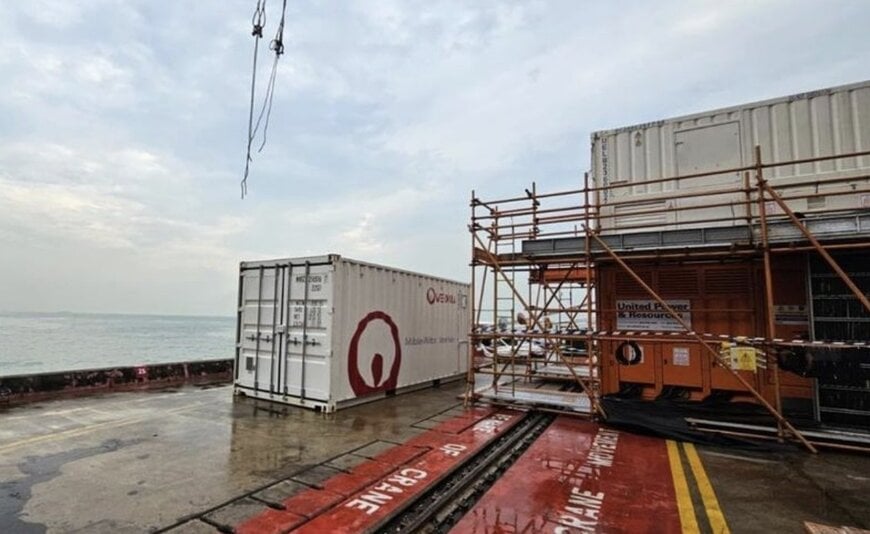
Reliable water treatment is central to operations in microelectronics, power generation, refining, and chemical processing. Ultrapure, demineralized, or deionized water directly affects equipment protection, steam quality, and product consistency. In this context, Sara Subramaniam, Southeast Asia Sales Leader for Mobile Water at Veolia, is positioning mobile water treatment systems as a deployable alternative to fixed infrastructure for planned maintenance, commissioning, and emergency response.
Water as operational infrastructure
In heavy and chemical process industries, water systems must deliver stable quality under variable raw water conditions and high load factors. Production increases, tighter discharge standards, and sustainability targets are placing additional strain on conventional fixed plants.
Mobile treatment units are designed to be transported, installed, and commissioned without long construction timelines or capital-intensive retrofits. Unlike permanent installations, these systems can be scaled or relocated as operational requirements change. This flexibility is relevant during facility upgrades, pilot testing of advanced treatment processes, or when regulatory changes require rapid compliance adjustments.
For companies integrating water management into a broader digital supply chain strategy, mobile units also provide a means to validate treatment performance before committing to permanent design modifications.
Deployment under commissioning pressure
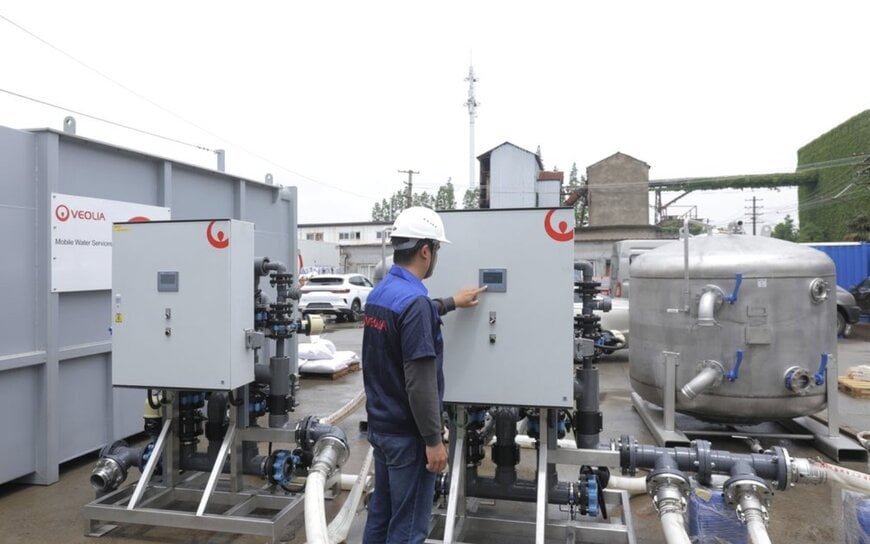
A case study from the heavy industrial sector illustrates the operational role of such systems. In 2018, during the development of Petronas’s RAPID Integrated Refinery and Petrochemical Complex in Johor, Malaysia, delays in the permanent water treatment plant created a shortfall in demineralized water required for steam blows and early commissioning activities.
To maintain the project timeline, Veolia deployed 31 containerized 40-foot mobile treatment units and associated skids from its global fleet. The temporary installation delivered up to 650 m³/h of demineralized water. Water quality parameters achieved included conductivity below 0.2 µS/cm and silica concentrations under 20 ppb—levels consistent with high-pressure boiler and refinery requirements.
The scope covered equipment supply, on-site power generation, and operational support. Water production began 16 weeks after contract award. Beyond bridging the commissioning gap, the installation accommodated fluctuating demand and provided redundancy alongside the permanent plant.
The project was later recognized by Global Water Intelligence as Industrial Water Project of the Year 2019, reflecting the operational scale and quality parameters achieved under compressed timelines.
From contingency tool to strategic asset
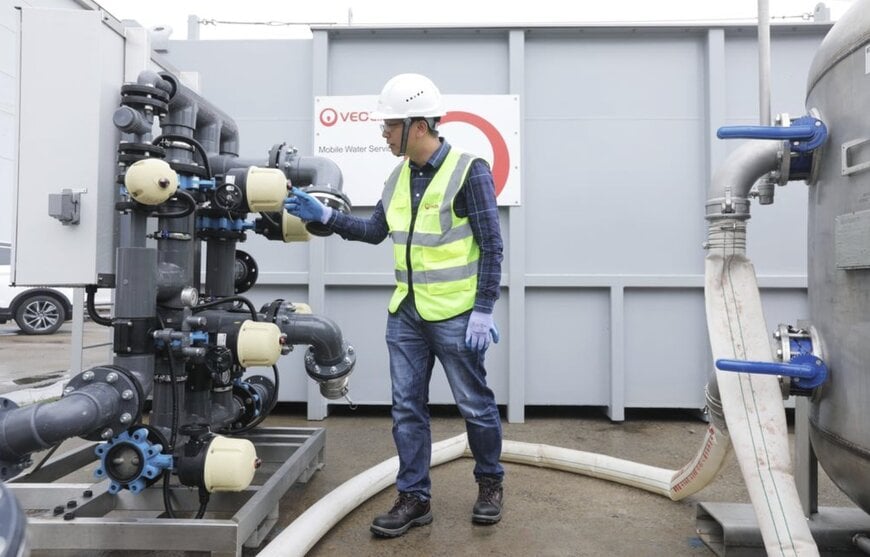
Mobile systems were historically viewed as temporary stopgap measures. Increasingly, they are being integrated into long-term water resilience strategies, particularly in sectors with variable production loads or high exposure to regulatory change.
Their modular design enables adaptation to raw water variability and evolving discharge requirements. In addition, mobile treatment can support circular water strategies by enabling reuse, reducing pollutant loads, and minimizing freshwater withdrawal. These factors are becoming central to industrial decarbonization and environmental compliance planning.
As environmental stewardship becomes embedded in corporate risk management frameworks, reliable access to treated water is linked not only to productivity but also to regulatory continuity and energy security.
Alignment with ecological transformation strategies
Veolia associates its mobile water portfolio with its GreenUp strategic program, which focuses on depollution, decarbonization, and resource regeneration. Within this framework, mobile treatment systems are positioned as part of a broader industrial water management approach that supports operational continuity while advancing sustainability targets.
For heavy and chemical process industries, the technical question is no longer whether mobile systems can meet purity and flow specifications. Demonstrated output levels—such as 650 m³/h at sub-0.2 µS/cm conductivity—indicate that containerized infrastructure can deliver performance parameters comparable to fixed installations, while offering deployment speed and flexibility under constrained project conditions.
www.veoliawatertechnologies.com
