
www.waterplant.tech
27
'26
Written on Modified on
Smart chlorine monitoring for food process water
Bürkert develops sensor-based water analysis systems enabling real-time chlorine monitoring to protect product quality and treatment equipment in food manufacturing processes.
www.buerkert.de
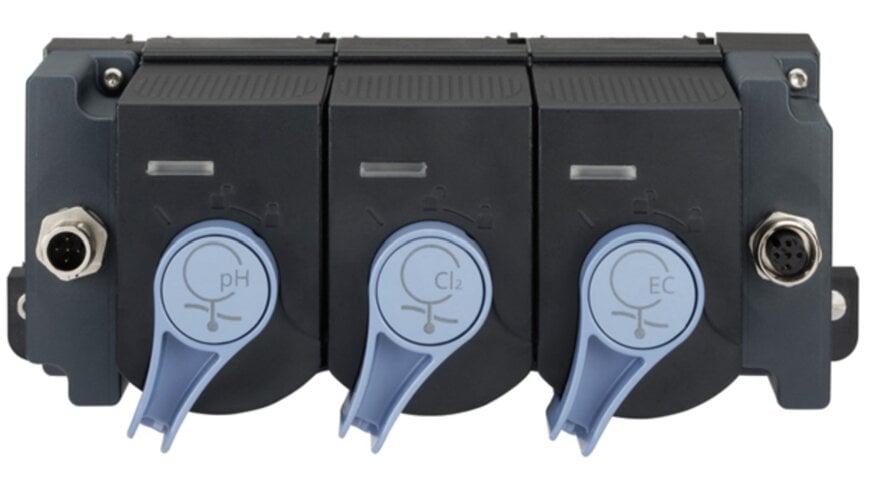
The Bürkert MS02 Chlorine Cube provides fast and precise chlorine measurements tailored to industrial applications.
Water quality control remains a critical requirement in food processing, where process water directly affects product safety, process reliability and equipment lifetime. In this context, Bürkert highlights the use of smart chlorine monitoring technology within its OALAB Type 8906 water analysis system to support water quality management in food manufacturing environments.
Water treatment as a critical step in food production
Water is used throughout food production processes, including ingredient preparation, product washing, steam generation and clean-in-place (CIP) systems. Chlorine is commonly used in municipal and private water supplies for disinfection, but residual chlorine must be removed before water reaches sensitive processes such as fermentation or applications involving active biological ingredients.
Granular activated carbon (GAC) filtration is widely used for chlorine removal, particularly in beverage production, where chlorine can affect taste, colour and aroma. Chlorine can also damage downstream treatment equipment such as reverse osmosis (RO) membranes and electro-deionisation systems, making monitoring essential for both product quality and asset protection.
Monitoring filter performance through chlorine measurement
Effective chlorine control requires monitoring both inlet and outlet concentrations to verify filter performance and detect breakthrough events. These measurements help operators determine carbon media condition, plan maintenance intervals and respond to process deviations.
Traditional monitoring technologies such as amperometric probes and colorimetric analysers can present operational challenges. Electrode-based sensors may require frequent maintenance due to fouling or drift, while reagent-based systems add complexity through chemical handling and mechanical components.
Response time is another limitation. Conventional sensors can require two to three minutes to reach stable readings, which may delay detection of chlorine spikes and increase the risk of process disruption or equipment damage.
Faster response through integrated smart sensor systems
Bürkert’s OALAB Type 8906 water analysis platform integrates the MS02 Chlorine Cube sensor using amperometric cell-on-chip measurement technology. This design enables a T90 response time of approximately 30 seconds, supporting faster process adjustments when chlorine levels change.
Faster measurement feedback allows optimisation of filter maintenance intervals, supports scheduling of backwashing operations and helps reduce unplanned downtime. These capabilities are relevant for automated food production environments where continuous process availability is required.
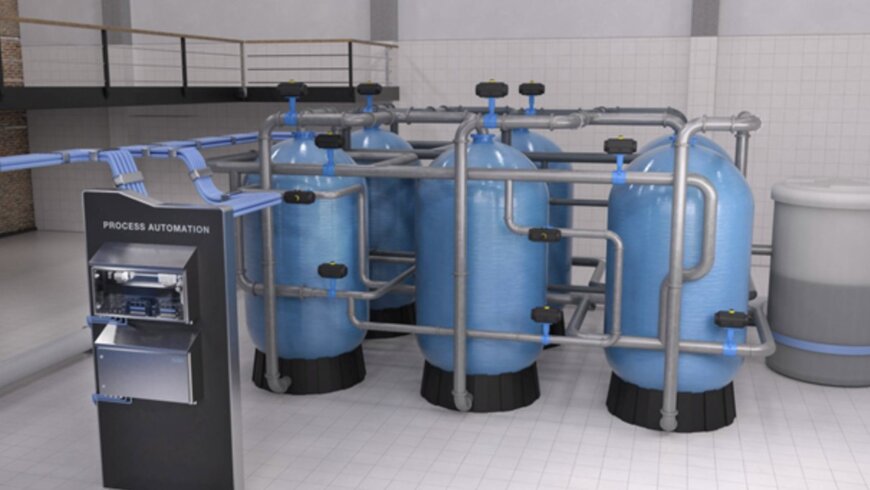
Fast, accurate and low-maintenance chlorine monitoring at GAC filters protects products, safeguards critical assets and reduces operational risk.
Sensor design focused on reduced maintenance requirements
Maintenance requirements remain a key factor in food production environments where hygiene and uptime are critical. Traditional sensors may require manual cleaning due to scaling or deposit formation, while colorimetric systems introduce ongoing servicing needs.
The MS02 sensor design incorporates a protective membrane intended to reduce deposit formation and eliminates electrolyte buffers that may introduce measurement drift. At GAC filter outlets, the sensor uses a floating zero-point design to confirm zero-chlorine conditions without requiring external reference sources.
In comparable industrial water applications, continuous operation periods exceeding two years without recalibration or maintenance have been reported, supporting reduced operating costs and improved process reliability.
Integrated water quality monitoring in automated production environments
The OALAB Type 8906 system is designed as a pre-assembled water analysis platform capable of measuring multiple water quality parameters, including chlorine, pH, ORP, conductivity and turbidity within a single installation footprint.
Additional features include low sample flow requirements to reduce water consumption, integrated data logging and remote connectivity options supporting predictive maintenance strategies. Compatibility with industrial communication protocols such as Profinet, Ethernet and Modbus TCP allows integration into existing industrial automation and digital supply chain monitoring environments.
Supporting compliance and process reliability
As food manufacturers seek to maintain regulatory compliance, product consistency and operational efficiency, water quality monitoring is becoming more closely integrated with process control strategies.
Smart sensor technologies supporting faster response times, reduced maintenance, and improved measurement accuracy enable a shift from reactive monitoring toward predictive process control, helping ensure that water treatment performance does not limit production continuity or product quality.
Edited by industrial journalist Aishwarya Mambet, with AI-assistance.
www.burkert.com
Water quality control remains a critical requirement in food processing, where process water directly affects product safety, process reliability and equipment lifetime. In this context, Bürkert highlights the use of smart chlorine monitoring technology within its OALAB Type 8906 water analysis system to support water quality management in food manufacturing environments.
Water treatment as a critical step in food production
Water is used throughout food production processes, including ingredient preparation, product washing, steam generation and clean-in-place (CIP) systems. Chlorine is commonly used in municipal and private water supplies for disinfection, but residual chlorine must be removed before water reaches sensitive processes such as fermentation or applications involving active biological ingredients.
Granular activated carbon (GAC) filtration is widely used for chlorine removal, particularly in beverage production, where chlorine can affect taste, colour and aroma. Chlorine can also damage downstream treatment equipment such as reverse osmosis (RO) membranes and electro-deionisation systems, making monitoring essential for both product quality and asset protection.
Monitoring filter performance through chlorine measurement
Effective chlorine control requires monitoring both inlet and outlet concentrations to verify filter performance and detect breakthrough events. These measurements help operators determine carbon media condition, plan maintenance intervals and respond to process deviations.
Traditional monitoring technologies such as amperometric probes and colorimetric analysers can present operational challenges. Electrode-based sensors may require frequent maintenance due to fouling or drift, while reagent-based systems add complexity through chemical handling and mechanical components.
Response time is another limitation. Conventional sensors can require two to three minutes to reach stable readings, which may delay detection of chlorine spikes and increase the risk of process disruption or equipment damage.
Faster response through integrated smart sensor systems
Bürkert’s OALAB Type 8906 water analysis platform integrates the MS02 Chlorine Cube sensor using amperometric cell-on-chip measurement technology. This design enables a T90 response time of approximately 30 seconds, supporting faster process adjustments when chlorine levels change.
Faster measurement feedback allows optimisation of filter maintenance intervals, supports scheduling of backwashing operations and helps reduce unplanned downtime. These capabilities are relevant for automated food production environments where continuous process availability is required.
Fast, accurate and low-maintenance chlorine monitoring at GAC filters protects products, safeguards critical assets and reduces operational risk.
Sensor design focused on reduced maintenance requirements
Maintenance requirements remain a key factor in food production environments where hygiene and uptime are critical. Traditional sensors may require manual cleaning due to scaling or deposit formation, while colorimetric systems introduce ongoing servicing needs.
The MS02 sensor design incorporates a protective membrane intended to reduce deposit formation and eliminates electrolyte buffers that may introduce measurement drift. At GAC filter outlets, the sensor uses a floating zero-point design to confirm zero-chlorine conditions without requiring external reference sources.
In comparable industrial water applications, continuous operation periods exceeding two years without recalibration or maintenance have been reported, supporting reduced operating costs and improved process reliability.
Integrated water quality monitoring in automated production environments
The OALAB Type 8906 system is designed as a pre-assembled water analysis platform capable of measuring multiple water quality parameters, including chlorine, pH, ORP, conductivity and turbidity within a single installation footprint.
Additional features include low sample flow requirements to reduce water consumption, integrated data logging and remote connectivity options supporting predictive maintenance strategies. Compatibility with industrial communication protocols such as Profinet, Ethernet and Modbus TCP allows integration into existing industrial automation and digital supply chain monitoring environments.
Supporting compliance and process reliability
As food manufacturers seek to maintain regulatory compliance, product consistency and operational efficiency, water quality monitoring is becoming more closely integrated with process control strategies.
Smart sensor technologies supporting faster response times, reduced maintenance, and improved measurement accuracy enable a shift from reactive monitoring toward predictive process control, helping ensure that water treatment performance does not limit production continuity or product quality.
Edited by industrial journalist Aishwarya Mambet, with AI-assistance.
www.burkert.com
