
www.waterplant.tech
12
'26
Written on Modified on
Industrial compressor for renewable natural gas applications
Copeland launches the Vilter VSGX compressor for mid- to large-scale biogas digesters, supporting renewable natural gas production and industrial decarbonization.
www.copeland.com
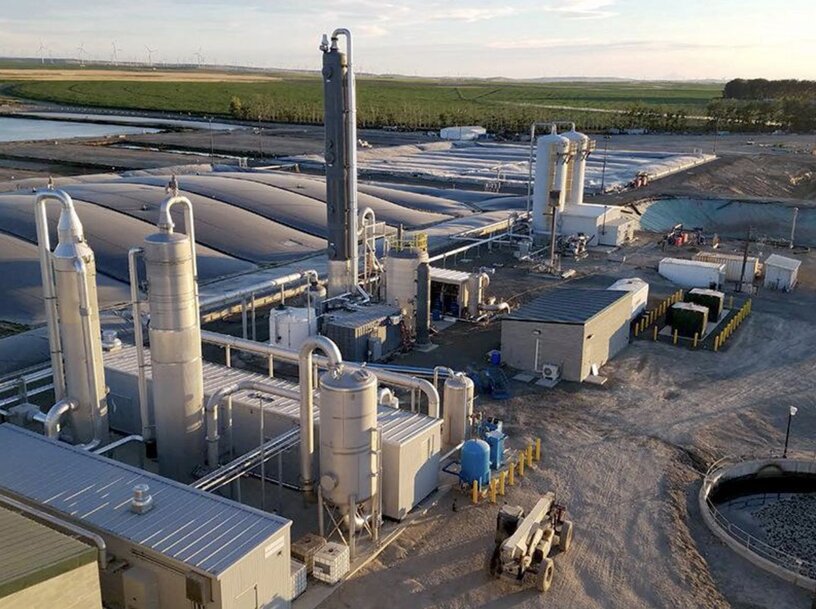
Copeland has introduced the Vilter VSGX compressor, a technical solution engineered for mid- to large-scale anaerobic digesters to facilitate the conversion of organic waste into renewable natural gas (RNG).
Technical optimization for renewable natural gas infrastructure
The Vilter VSGX is built on a single-screw compression platform specifically adapted for the variable feedstocks found in dairy farms, wastewater treatment facilities, and food waste digesters. This technical approach addresses the inherent fluctuations in biogas composition, ensuring stable operation during the capture and processing of organic waste streams. By establishing a reliable interface between raw biogas production and fuel conversion, the system supports the digital supply chain of renewable energy, where equipment uptime is critical for meeting stringent sustainability mandates and emission-reduction targets.
Operational efficiency and cost reduction in industrial decarbonization
A primary technical objective of the VSGX series is the reduction of upfront capital expenditure by double-digit percentages compared to conventional industrial compression systems. This is achieved through a configure-to-order design that minimizes engineering complexity and standardizes manufacturing lead times. Key performance specifications include:
- Volumetric Flow Range: Processing capacities from 800 to 2,100 standard cubic feet per minute (scfm).
- Integrated Control Systems: Fully integrated automation to manage pressure ratios optimized for mid- to large-scale digester environments.
- System Versatility: Engineering compatibility for both new installations and retrofits within the emerging automotive data ecosystem for alternative fuels.
Impact on global emission capture and service life
Copeland’s compression technology currently facilitates the processing of over 20 million metric tons of CO2 emissions annually. The introduction of the VSGX expands this capability by providing a more accessible entry point for regional RNG projects. The system is supported by a comprehensive North American service and aftermarket network, ensuring long-term operational reliability and serviceability. By lowering the financial and technical barriers to high-efficiency compression, the technology enables industrial operators to move decarbonization projects from concept to active operation more rapidly, contributing to the establishment of approximately 43,000 projected organic waste sites in North America by 2050.
Additional Context
This section details technical specifications and competitive benchmarking not included in the original product announcement.
The Vilter VSGX single-screw architecture benchmarks as a mechanically superior alternative to twin-screw compressors in biogas applications due to its balanced radial and axial loads. In a single-screw configuration, the main rotor is flaked by two gate rotors, creating a symmetrical compression process that significantly reduces internal bearing stress and extends the mean time between failures (MTBF) compared to asymmetric twin-screw designs. Furthermore, while many standard industrial compressors require high-grade synthetic lubricants that can contaminate sensitive biogas membranes, the Vilter platform is optimized for compatibility with specialized oils that resist acidification from hydrogen sulfide (H2S), a common impurity in digester gas. Compared to reciprocating compressors, which are often used for high-pressure injection, the VSGX rotary screw provides a continuous, pulse-free flow, which is a critical benchmark for the efficiency of downstream membrane separation units in the RNG purification process.
Edited by Romila DSilva, Induportals editor – adapted by AI.
Copeland’s compression technology currently facilitates the processing of over 20 million metric tons of CO2 emissions annually. The introduction of the VSGX expands this capability by providing a more accessible entry point for regional RNG projects. The system is supported by a comprehensive North American service and aftermarket network, ensuring long-term operational reliability and serviceability. By lowering the financial and technical barriers to high-efficiency compression, the technology enables industrial operators to move decarbonization projects from concept to active operation more rapidly, contributing to the establishment of approximately 43,000 projected organic waste sites in North America by 2050.
Additional Context
This section details technical specifications and competitive benchmarking not included in the original product announcement.
The Vilter VSGX single-screw architecture benchmarks as a mechanically superior alternative to twin-screw compressors in biogas applications due to its balanced radial and axial loads. In a single-screw configuration, the main rotor is flaked by two gate rotors, creating a symmetrical compression process that significantly reduces internal bearing stress and extends the mean time between failures (MTBF) compared to asymmetric twin-screw designs. Furthermore, while many standard industrial compressors require high-grade synthetic lubricants that can contaminate sensitive biogas membranes, the Vilter platform is optimized for compatibility with specialized oils that resist acidification from hydrogen sulfide (H2S), a common impurity in digester gas. Compared to reciprocating compressors, which are often used for high-pressure injection, the VSGX rotary screw provides a continuous, pulse-free flow, which is a critical benchmark for the efficiency of downstream membrane separation units in the RNG purification process.
Edited by Romila DSilva, Induportals editor – adapted by AI.
