
www.waterplant.tech
22
'26
Written on Modified on
Stainless Steel Hose Cap Assembly for High-Purity Water Systems
Aalberts integrated piping systems introduces the Apollo 76F-HCA stainless steel hose cap for fluid handling.
aalberts-ips.com
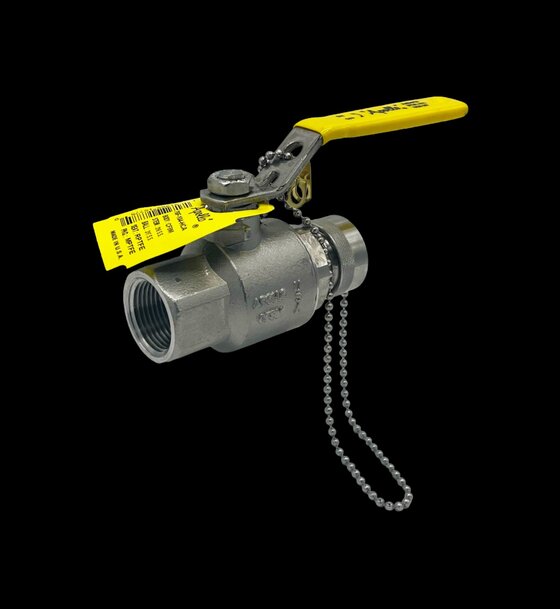
Aalberts integrated piping systems has launched the "Apollo" 76F-HCA, a new stainless steel hose cap assembly. The hardware is engineered for demanding fluid handling environments, providing corrosion resistance in chemically aggressive and high-purity water systems.
Material Compatibility and DI Water Systems
The 76F-HCA utilizes stainless steel construction to maintain system integrity in chloride-rich and high-purity water environments. This material specification is critical for applications utilizing deionized (DI) water systems, such as process cooling and data center infrastructure. Because DI water is highly aggressive to softer alloys like brass, the stainless steel composition prevents material degradation and avoids contamination within the fluid path. The durable finish also permits integration into sanitary environments, including food and beverage processing, pharmaceutical manufacturing, and wastewater treatment facilities.
Thread Protection and Mechanical Design
The assembly is mechanically designed to protect the threads at the hose connection, minimizing the likelihood of leaks or damaged fittings during repeated field attachment. To support organized maintenance and inspection routines, the cap is equipped with a secure chain that prevents component loss during service intervals. These design features are intended to extend service life and reduce the frequency of component replacements in industrial washdown stations and marine installations.
Additional Context: This section details technical specifications not included in the original announcement
In industrial fluid dynamics, deionized (DI) water acts as an aggressive solvent. Because the water has been stripped of its natural mineral ions through reverse osmosis or ion-exchange resins, it constantly seeks to return to chemical equilibrium by leaching ions from its surrounding environment. If brass components are used in a DI water loop, the fluid will rapidly strip the zinc and copper from the alloy—a process known as leaching or dezincification. This not only destroys the structural integrity of the valve, leading to pinhole leaks, but also introduces conductive metal ions back into the water, defeating the purpose of using non-conductive DI water in sensitive data center cooling loops. Consequently, austenitic stainless steels (such as 304 or 316L) are mandatory for DI fluid paths, as their stable chromium oxide passive layer resists this ionic leaching process.
Edited by Lekshman Ramdas, Induportals editor – adapted by AI.
www.aalberts-ips.com
