
www.waterplant.tech
29
'26
Written on Modified on
Fusion Coating Extends Wastewater Pump Rotor Life
NETZSCH introduces a metallurgically bonded solution to improve wear resistance and maintenance intervals.
www.netzsch.com
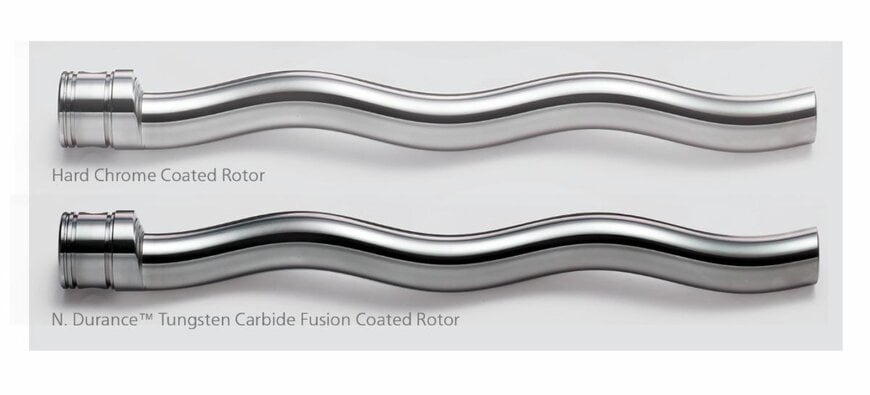
NETZSCH has introduced the N.Durance tungsten carbide fusion coating for the rotors of its NEMO progressing cavity pumps. Engineered for municipal wastewater treatment plants (WWTPs), this proprietary metallurgical bonding technique protects internal pump components against severe abrasion and chemical corrosion, extending the mean time between failures (MTBF) in harsh fluid handling environments.
Metallurgical Bonding and Wear Resistance
The N.Durance technology utilizes a fusion process that creates a direct metallurgical bond with the rotor's base metal, distinguishing it from traditional thermal spray methods or conventional chrome plating. This structural integration prevents the coating from delaminating, flaking, or separating when subjected to high friction or corrosive wastewater. Featuring a surface hardness of 1,300 Vickers (approximately 9 on the Mohs scale), the tungsten carbide layer provides extreme resistance to the abrasive solids, chemical aggregates, and sludge typically conveyed in municipal operations. By maintaining strict geometric tolerances and minimizing surface degradation, this enhanced rotor durability also limits the frictional wear of the adjacent elastomeric stator, further stabilizing overall system reliability.
Hardware Tiers and Predictive Monitoring
To accommodate varying operational parameters and budgetary requirements, the N.Durance coating is offered in three specification tiers: Advanced, Pro, and Ultimate. By utilizing a fusion technique, the manufacturing process also eliminates the environmental and occupational hazards associated with toxic hexavalent chromium plating. The rotors are machined directly from bar stock at NETZSCH’s US facilities, enabling rapid localized production timelines and ensuring full compliance with Build America, Buy America (BABA) standards. Additionally, the pump hardware can be integrated with NETZSCH’s NORIUS smart monitoring technology, which provides continuous data acquisition on pump performance to facilitate predictive maintenance protocols and minimize unplanned plant downtime.
Additional Context: This section details technical specifications not included in the original announcement
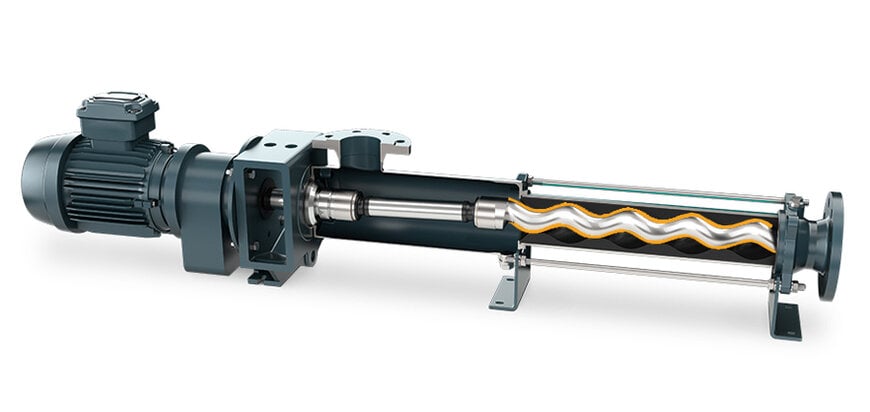
In fluid dynamics, a progressing cavity pump (PCP) operates based on the Moineau geometry, where a single-helix metallic rotor turns inside a double-helix elastomeric stator. This interaction creates discrete, sealed cavities that progress axially, conveying highly viscous, abrasive, or shear-sensitive fluids without pulsation. Because the rotor maintains a continuous, tight interference fit with the stator, severe abrasive and frictional wear occurs. Traditional High Velocity Oxygen Fuel (HVOF) coatings apply tungsten carbide powder via a supersonic gas jet, which creates only a mechanical bond with inherent micro-porosity. In highly corrosive wastewater applications, chemicals can penetrate these microscopic pores, attacking the base metal underneath and causing the HVOF layer to spall off. In contrast, a true metallurgical fusion process melts the coating matrix directly into the base substrate. This eliminates porosity and establishes a covalent-level bond that cannot delaminate under the extreme shear forces of PCP operation, making the 1,300 Vickers hardness layer structurally integral to the rotor itself.
Edited by Lekshman Ramdas, Induportals editor – adapted by AI.
www.netzsch.com
