
LG Sonic’s water quality sensors enable early detection of harmful algal blooms
The six core sensors monitor algae, cyanobacteria, dissolved oxygen, temperature, pH and turbidity, helping drinking water utilities anticipate blooms and optimize intake operations.
www.lgsonic.com
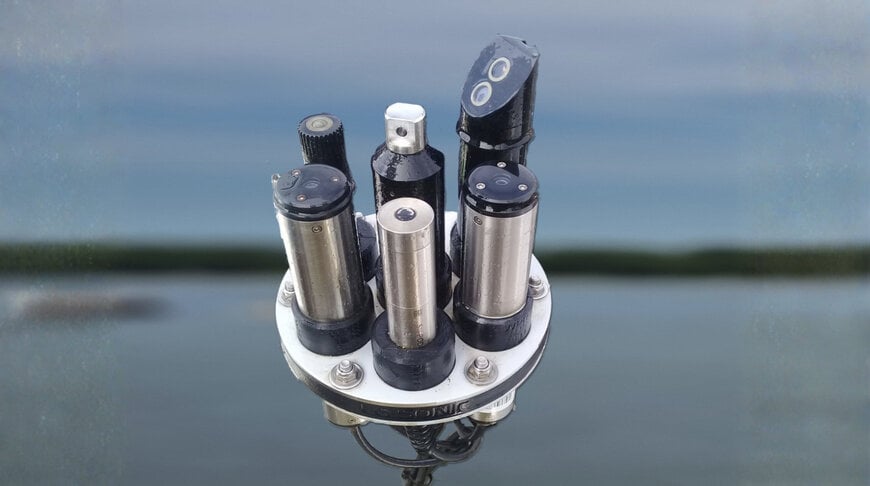
Drinking water utilities face severe operational disruptions when sudden algal blooms enter raw water intakes, leading to taste-and-odor complaints, filter clogging, and dangerous cyanotoxin loads. LG Sonic addresses these water treatment challenges through its Monitoring Buoy and Vertical Profiler systems, deploying continuous in-situ sensor packages that provide real-time telemetry on key biological, chemical, and physical parameters to guide treatment plants and intake operations.
Operating Mechanisms of In-Situ Fluorescence and Optical Detection
Municipal water intakes require early warning indicators before biomass reaches treatment infrastructure. Traditional laboratory grab sampling introduces lag times of multiple days, allowing blooms to form, migrate, or collapse unnoticed. Continuous reservoir water quality sensors resolve this by measuring biochemical shifts directly in the water column every ten minutes.
Direct algal biomass detection relies on optical fluorescence sensors. These instruments emit specific excitation light wavelengths into the water and measure the emitted fluorescence from target pigments. Chlorophyll-a sensors capture total photosynthetic biomass across all algal groups, indicating the overall rate of biomass accumulation. Because diatoms, green algae, and cyanobacteria share chlorophyll-a, this reading alone cannot identify hazardous species.
To detect harmful cyanobacteria, utilities deploy phycocyanin sensors. Phycocyanin is an accessory photosynthetic pigment unique to blue-green algae in freshwater ecosystems. When phycocyanin concentrations rise independently of or in parallel with chlorophyll-a, operators receive advance warning of potential microcystins, geosmin, or 2-methylisoborneol (MIB) release before toxins reach treatment basins.
Early Physicochemical Indicators of Reservoir Stratification
Thermal stratification and biochemical cycles trigger blooms before biomass surges appear on optical sensors. In-situ monitoring packages therefore incorporate dissolved oxygen, temperature, and pH sensors as early physical-chemical indicators.
Solar heating creates thermal density layers, separating warm surface waters from cold, dense hypolimnetic layers. Water temperature probes track the depth of the resulting thermocline, identifying temperature boundaries where cyanobacteria proliferate, typically above 20 degrees Celsius.
In the isolated bottom layer, microbial decomposition consumes available oxygen without atmospheric replenishment. When dissolved oxygen levels fall below 2 mg/L, the hypolimnion becomes anoxic. This chemical reduction triggers internal phosphorus loading, releasing sediment-bound phosphate into the water column. When seasonal cooling or high winds initiate thermal turnover, these stored nutrients mix into the photic zone, fueling rapid surface blooms.
Electrochemical pH sensors track daytime photosynthetic dynamics. Microscopic algae consume dissolved carbon dioxide during daylight hours, shifting carbonate equilibrium and driving afternoon pH levels upward. Daily pH swings exceeding 1.0 unit, or peak values surpassing 9.0, serve as direct operational cross-checks for active photosynthesis, while informing plant operators of shifting raw-water coagulation chemistry.
Optical Turbidity and Raw Water Clarification Demands
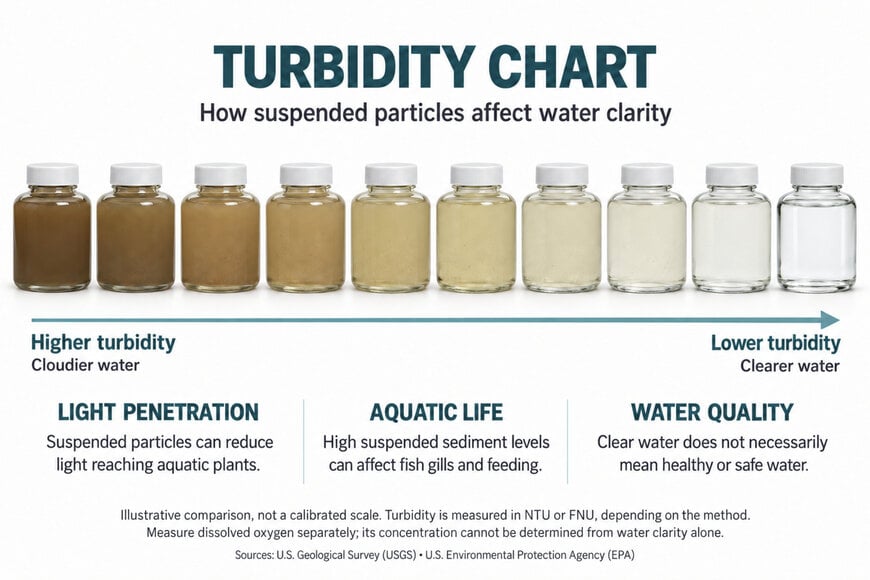
Turbidity sensors measure nephelometric turbidity units (NTU) via optical light-scattering, replacing manual Secchi disk observations with automated readings transmitted every ten minutes. Turbidity spikes paired with elevated chlorophyll-a indicate biological blooms, whereas isolated turbidity surges after precipitation indicate mineral sediment transport from the catchment.
Real-time turbidity telemetry directly governs chemical dosing at municipal plants, allowing operators to adjust coagulant feed rates, manage flocculation kinetics, and prevent rapid filter head-loss buildup.
Nutrient Add-Ons and Autonomous Wet-Chemistry Integration
Where total biological monitoring requires nutrient tracking, wet-chemistry phosphate analyzers complement optical arrays. Because dissolved orthophosphate acts as the primary limiting nutrient in temperate freshwater reservoirs, measuring phosphate concentration defines the theoretical biomass ceiling of an impending bloom.
Optical sensors cannot quantify dissolved orthophosphate directly. Autonomous monitoring stations utilize automated lab-on-chip wet chemistry, employing the standard molybdate-vanadate colorimetric method. These automated units carry onboard reagent storage lasting up to six months and execute automated cleaning cycles to prevent biofouling on measurement cells.
Sensor Placement Protocols Across the Water Column
Sensor placement directly dictates data validity. Cyanobacteria possess gas vesicles that provide active buoyancy regulation, allowing cells to migrate upward for sunlight during the morning and descend to nutrient-rich lower layers in the afternoon. Fixed-depth surface sensors often miss submerged populations migrating through the water column.
To maintain continuous awareness of bloom depth, monitoring equipment must sit directly within the intake zone, operating as automated vertical profilers that sample down to 100 meters. Secondary fixed or profiling buoys deployed at main river inflows detect incoming catchment run-off before it reaches the abstraction point, while sensors installed at the deepest reservoir zone monitor anoxia-driven internal loading.

Operational Data Integration and Utility Decision-Making
Continuous water quality telemetry converts passive monitoring into proactive intake control:
- Intake Gate Selection: Vertical profiling allows operators to adjust selective withdrawal gates, drawing raw water from depths free of cyanobacteria and buoyant surface scums.
- Chemical Dosing Optimization: Advance notification of geosmin, MIB, and cyanotoxin risks permits timed additions of powdered activated carbon (PAC), preventing chemical over-dosing while avoiding breakthrough.
- Targeted Laboratory Testing: Real-time phycocyanin alerts prompt laboratory technicians to execute targeted enzyme-linked immunosorbent assays (ELISA) or liquid chromatography-mass spectrometry (LC-MS) for microcystin quantification, replacing arbitrary calendar-based sampling.
Field Anti-Fouling and Telematics Maintenance
In productive waters, optical windows accumulate bacterial biofilms within days, causing upward measurement drift. Automated mechanical wipers clean the optical faceplate prior to every reading cycle, extending manual calibration intervals for optical sensors to quarterly service schedules. Electrochemical pH electrodes require monthly calibration during peak summer operations, while optical dissolved oxygen caps receive post-turnover inspection to remove manganese and iron scaling. Telemetry transmitters broadcast collected readings over 4G cellular or satellite networks, feeding SCADA infrastructure via Modbus, RS485, and SDI-12 protocols.
Additional Context:
This section details technical specifications and competitive benchmarking not included in the original product announcement.
Continuous intake protection packages compete across several recognized instrumentation classes, including multiparameter water quality sondes such as the YSI EXO2, the OTT HydroMet Hydrolab HL7, and the In-Situ Aqua TROLL 600. Standard industry specifications for multi-parameter sondes include optical chlorophyll-a detection ranges of 0 to 400 microgram per liter (or 0 to 100 relative fluorescence units), phycocyanin ranges of 0 to 100 microgram per liter, dissolved oxygen measurement via optical luminescent lifetime decay with an accuracy of plus or minus 0.1 mg/L, and nephelometric turbidity detection using 850 nm infrared light sources complying with ISO 7027 standards over a range of 0 to 4,000 FNU/NTU.
Regulatory frameworks from the World Health Organization (WHO) and the United States Environmental Protection Agency (US EPA) establish quantitative action thresholds for drinking water facilities. The WHO Alert Levels Framework defines Alert Level 1 at 1 microgram per liter of chlorophyll-a (or approximately 2,000 cyanobacterial cells per milliliter), prompting enhanced monitoring, and Alert Level 2 at 12 micrograms per liter, requiring active cyanotoxin extraction or abstraction adjustments. The US EPA establishes 10-day drinking water health advisory levels for total microcystins at 0.3 micrograms per liter for bottle-fed infants and pre-school children, and 1.6 micrograms per liter for school-age children and adults. Multiparameter profiling networks serve as the primary engineering mechanism to trigger compliance testing against these international benchmarks.
Edited by Natania Lyngdoh, Induportals editor, with AI assistance.
www.lgsonic.com
