
Jacobs to Advance Nitrous Oxide Emissions Research in the Water Sector
New project for The Water Research Foundation will develop an industry-first database and decision support tool for N₂O quantification and mitigation.
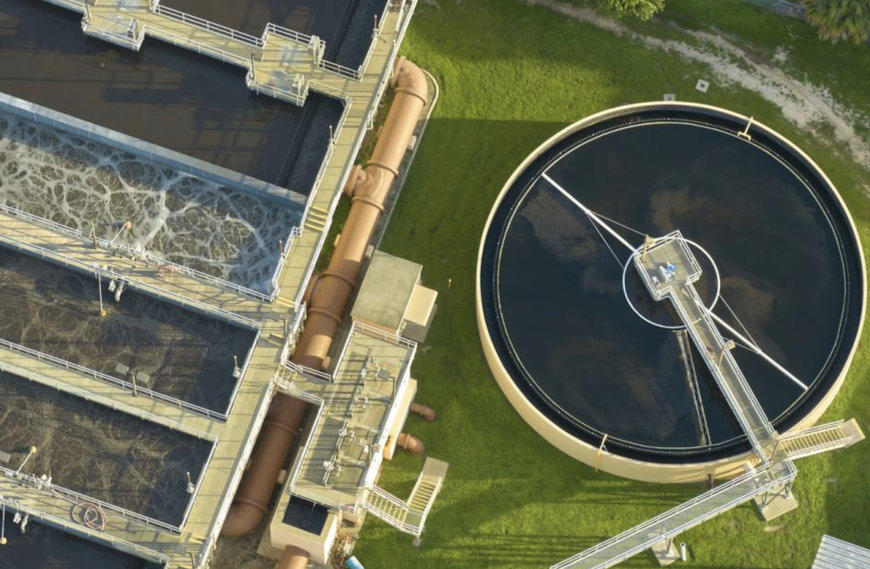
In collaboration with 25 partner water and wastewater utilities and Princeton University, Jacobs will deliver an industry-first N₂O monitoring project, including a project database and decision support tool providing utilities with an improved understanding of N₂O risks and mitigation measures.
As countries and states decarbonize their energy supplies, direct process emissions of N₂O and methane produced during wastewater treatment can account for up to 75% of the greenhouse gas (GHG) emissions reported by water and wastewater utilities. N₂O – which has a global warming potential (GWP) 273 times higher than CO₂ – is produced during the biological treatment processes at WRRFs.
In countries where energy-related emissions have come down significantly due to the adoption of renewable electricity, ambitious net zero plans have been set at the sector level. Denmark, for example, has recently published a proposal for N₂O regulation to support their ambition to reduce N2O by emissions by 50% at WRRFs. In Switzerland, an innovative N2O abatement program exists, while in the U.K., Australia and New Zealand, ambitious sector-level and utility level targets are being set to reduce Scope 1 emissions.
N₂O emissions at WRRFs are highly complex and variable depending on site-specific conditions, creating challenges for accurate monitoring, quantification and mitigation. The research project will improve understanding of N₂O emissions by developing whole-plant N₂O emissions estimates across multiple WRRFs that employ commonly used treatment processes. The estimates will be developed by implementing continuous online monitoring for a minimum one-year period at partner utilities’ facilities. Compiled with additional industry data in a first-of-its kind N₂O database, the project will provide standard methodologies and guidance for N₂O quantification and mitigation at WRRFs and a decision-making tool to support utility and country-level implementations.
“Reducing process emissions is critical to the water sector’s role in climate mitigation and requires concerted action to understand N₂O production and reduction potential at water resource recovery facilities,” says Jacobs Global Principal for Wastewater Energy Optimization and Sector Decarbonization Emma Shen. “This Water Research Foundation project will develop practical guidance for N₂O monitoring and mitigation, drawing on our technical expertise at Jacobs and a collaborative global network of utilities tackling greenhouse gas emissions.”
The research findings will also contribute to a separate WRF project, supported by Jacobs, which is developing a GHG emissions data library for water utilities in the U.S.
www.jacobs.com
