
www.waterplant.tech
09
'26
Written on Modified on
Advanced wastewater technologies protect the Oslo Fjord
Veolia and MOVAR are upgrading the Fuglevik wastewater treatment plant to meet stricter nutrient limits and improve water quality in the Oslo Fjord.
www.veoliawatertechnologies.co.uk
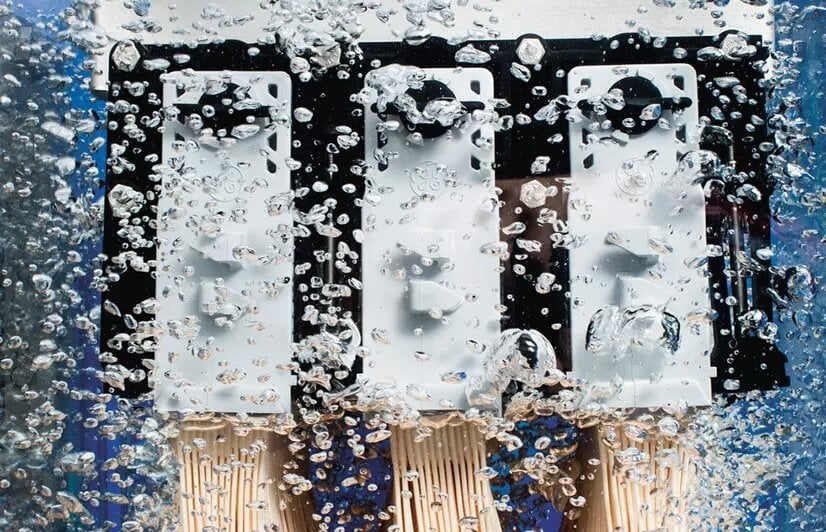
Veolia has been awarded a €28.5 million contract to expand and modernise Norway’s Fuglevik wastewater treatment plant, a strategic facility serving the Moss region. Delivered in cooperation with MOVAR, the project addresses rising wastewater volumes and new regulatory requirements for nitrogen removal, while contributing to the restoration of the Oslo Fjord’s marine ecosystem.
Context of the cooperation
The Oslo Fjord has experienced increasing ecological stress due to nutrient pollution, leading to eutrophication, algae growth, and biodiversity loss. In response, Norwegian authorities have introduced stricter discharge limits, particularly for nitrogen. MOVAR, responsible for water and wastewater services in the Moss area, partnered with Veolia to identify a treatment solution capable of achieving high pollutant removal within the constraints of the existing site.
The cooperation was structured to balance environmental performance, footprint limitations, and lifecycle impacts, including carbon emissions associated with construction.
Technical solution and responsibilities
Veolia is responsible for the design and implementation of the upgraded treatment process, integrating several proprietary technologies into a compact system. The core of the solution combines the Hybas™ integrated fixed-film activated sludge (IFAS) process with AnoxKaldnes™ moving bed biofilm reactor (MBBR) technology to enhance biological treatment and nitrogen removal.
ZeeWeed™ membrane bioreactor (MBR) technology will be deployed to achieve high-effluent quality, enabling efficient removal of fine particles and microplastics. Together, these technologies form a high-capacity, energy-efficient process with a reduced physical footprint compared with conventional treatment lines.
MOVAR provides project oversight and ensures alignment with regional infrastructure planning and environmental objectives.
Deployment and environmental performance
The upgraded facility will serve approximately 85,000 people. By reusing existing buildings and concrete structures during the pre-clarification stage, the project reduces construction-related emissions and material use.
Once operational, the system is designed to achieve removal rates of around 99% for microplastics and particles, at least 70% for nitrogen with the option to increase beyond 85%, and approximately 93% for phosphorus. These reductions directly address the pollutants responsible for eutrophication in the fjord.
Resource recovery and circular economy
In addition to pollutant removal, the project incorporates an advanced phosphorus recovery system. Phosphorus will be recovered from wastewater streams as struvite and reused as an organic fertilizer, reducing nutrient discharge while preserving a critical raw material. Biogas generated during treatment will be used on site to supply heat and electricity, supporting energy self-sufficiency.
These measures align with Veolia’s GreenUp strategy, which focuses on combining environmental protection with resource recovery.
Expected impact and timeline
Construction is underway, with commissioning scheduled for 2029. The upgraded Fuglevik plant will play a central role in improving treated wastewater quality, supporting compliance with national regulations, and protecting the Oslo Fjord. The project illustrates how cooperation between utilities and technology providers can deliver scalable, high-performance wastewater treatment while integrating circular economy principles.
www.veoliawatertechnologies.com
