
www.waterplant.tech
16
'26
Written on Modified on
Floating desalination units target coastal water scarcity
Veolia and SBM Offshore partner on reverse-osmosis FPUs producing up to 100,000 m³/day for municipalities and water-stressed industries.
www.veoliawatertechnologies.co.uk
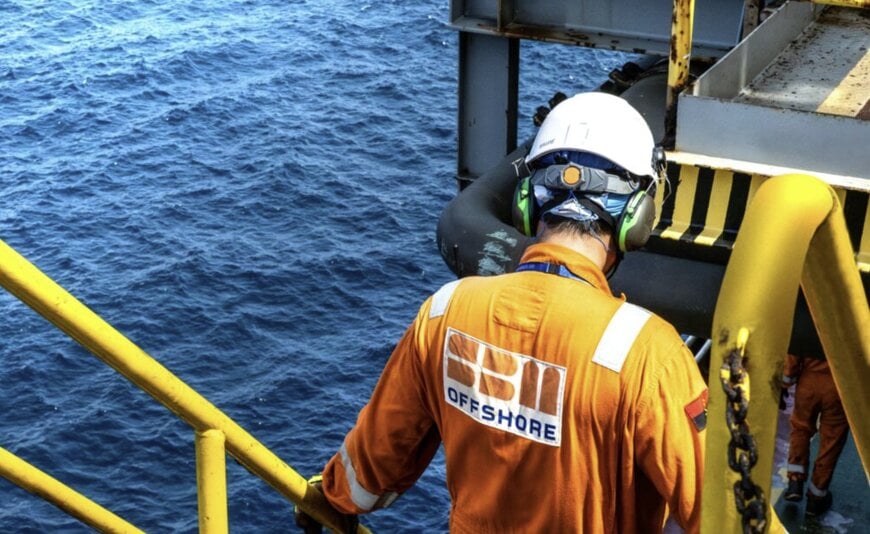
Coastal regions and water-intensive industries are facing increasing constraints from drought risk, climate-driven supply disruptions, and rising demand, pushing utilities and operators to look beyond conventional onshore desalination builds. Against this background, Veolia and SBM Offshore have signed a Memorandum of Understanding to develop floating freshwater production units (FPUs) that combine offshore platform engineering with reverse osmosis desalination.
Reverse osmosis moves offshore in modular FPUs
The partnership centers on offshore-deployable desalination units designed to produce freshwater at an industrial scale using reverse osmosis and integrated water treatment processes. Veolia will contribute desalination and treatment technology for the water-processing scope, while SBM Offshore brings engineering experience from floating offshore production systems used in deepwater infrastructure.
The concept is positioned as an ocean-based alternative to fixed onshore desalination plants, targeting projects where land footprint, permitting, construction timelines, or location constraints make conventional builds difficult.
Up to 100,000 m³/day capacity and mobile deployment
The FPUs are specified to produce up to 100,000 cubic meters of freshwater per day, described as equivalent to the needs of around 500,000 inhabitants. Beyond output, the proposed value lies in deployment flexibility: the floating units are intended to be delivered on shorter timelines than onshore construction, scaled in capacity as requirements change, and relocated if demand patterns shift.
For industrial sites and coastal utilities, this approach is positioned as a route to maintain supply continuity while reducing dependence on stressed local freshwater sources.
Target markets: coastal municipalities, mining, heavy industry
The partners outline three primary segments for the solution. Municipal water systems in coastal areas are highlighted where demand growth and climate variability are increasing supply risk. Mining operations in water-scarce regions are included where securing process water intersects with environmental constraints and stakeholder acceptance. Heavy industries are also a target, particularly those requiring a stable freshwater supply as part of broader transition plans toward lower-carbon operations.
Across these sectors, floating desalination is positioned as a way to reduce competition for limited onshore water resources between industrial users and surrounding communities.
End-to-end scope from engineering to long-term operations
The collaboration is intended to cover the full project lifecycle, including engineering, procurement, construction, installation, commissioning and long-term operation of the floating desalination units. This positions the concept as an integrated delivery model rather than a standalone equipment package—aimed at organizations seeking managed water infrastructure with predictable capacity and availability.
By combining modular offshore infrastructure with reverse osmosis production, the partnership frames floating desalination as a scalable response to water security constraints affecting industrial continuity and coastal supply planning.
www.veoliawatertechnologies.com
