
www.waterplant.tech
26
'26
Written on Modified on
Optimising Industrial Boiler Performance Through Volatile Film-Forming Amines
Kurita Europe implements Cetamine technology to enhance heat transfer efficiency and provide comprehensive corrosion protection within industrial steam generation systems.
www.kurita.co.jp
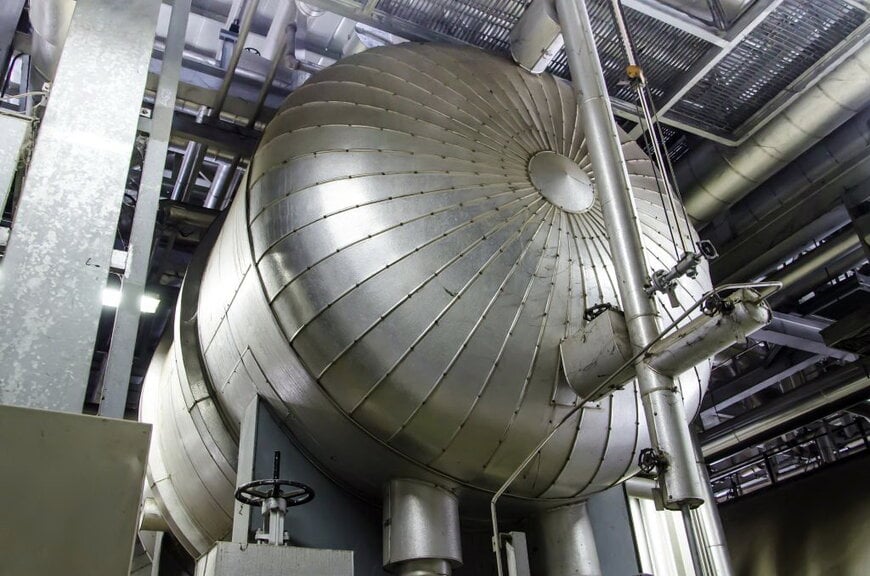
Industrial boiler operations rely on precise chemical treatment to prevent scale formation and corrosion, factors that directly impact energy consumption and structural integrity. The application of film-forming amines (FFA) represents a shift from traditional salt-based conditioning to a volatile, surface-active approach that addresses the entire steam-water cycle, including areas frequently left untreated by conventional non-volatile programs.
Mechanisms of Surface Protection and Heat Transfer
The technical functionality of Cetamine centers on the adsorption of a monomolecular film onto metal surfaces. This hydrophobic barrier prevents corrosive agents, such as oxygen and carbon dioxide, from reaching the metallurgy. Unlike traditional phosphate or caustic treatments that increase the dissolved solids (TDS) in boiler water, this organic technology functions at lower concentrations.
By maintaining cleaner heat transfer surfaces and preventing the deposition of insulating scale, the technology reduces the thermal resistance between the combustion side and the water side. This results in a measurable reduction in fuel consumption and blowdown requirements. In a digital supply chain where resource efficiency is prioritized, reducing the water and energy footprint of steam production provides a quantifiable improvement in the life cycle assessment of industrial facilities.
Application in the Automotive Data Ecosystem and Power Generation
The technology is applicable across high-demand sectors, including the automotive data ecosystem, chemical processing, and food production, where steam reliability is critical. In complex industrial networks, the volatility of these amines ensures that protection extends into the condensate system. This reduces the concentration of iron in the return water, lowering the risk of flow-accelerated corrosion and subsequent component failure.
Operational data indicates that switching to film-forming programs can reduce blowdown rates by up to 50% depending on the feed water quality. This reduction directly correlates to savings in makeup water and the thermal energy required to heat that water to operating temperature.
Real-World Case Study: Massive Water, Energy & CO2 Savings
A site with four 21-23 bar steam generators on softened makeup switched from a sulfite/phosphate/amine regime that delivered unstable performance (poor condensate pH, high iron > 0.2 ppm, only 50% condensate return) to Cetamine®.
Results:
- 16.000 m3/year less water (≈€45k/year)
- 2.5 million kWh/year energy saved (≈€175k/year)
- 750 t/year CO2 avoided (≈€60k/year)
Totaling ≈ €280k/year savings – while steam output rose by ∼1.7%.
Standards and Regulatory Compliance
The formulation of these film-forming products adheres to international safety and quality standards, including FDA and NSF certifications for applications where steam may come into contact with regulated products. The transition to organic treatment also simplifies the management of wastewater, as it reduces the inorganic salt load typically discharged during the blowdown process.
By replacing multi-component liquid programs with integrated film-forming technology, operators can achieve more stable pH levels throughout the steam-water cycle. This stability is essential for the long-term preservation of turbines and heat exchangers, mitigating the risk of unplanned downtime in continuous manufacturing environments.
www.kurita.eu
Gerald Nicholas
Standards and Regulatory Compliance
The formulation of these film-forming products adheres to international safety and quality standards, including FDA and NSF certifications for applications where steam may come into contact with regulated products. The transition to organic treatment also simplifies the management of wastewater, as it reduces the inorganic salt load typically discharged during the blowdown process.
By replacing multi-component liquid programs with integrated film-forming technology, operators can achieve more stable pH levels throughout the steam-water cycle. This stability is essential for the long-term preservation of turbines and heat exchangers, mitigating the risk of unplanned downtime in continuous manufacturing environments.
www.kurita.eu
Gerald Nicholas
