
www.waterplant.tech
27
'26
Written on Modified on
Mobile water treatment systems for mining operations
Veolia develops containerised water treatment systems designed to support mining sites with flexible process water management and regulatory compliance in remote locations.
www.veoliawatertechnologies.com
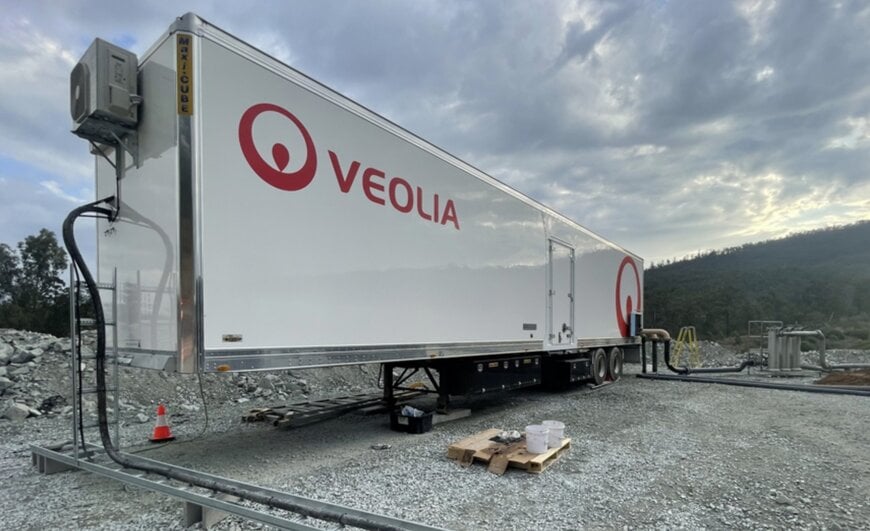
Water availability and treatment remain critical operational factors in mining, supporting applications ranging from mineral processing to dust suppression and potable supply. In this context, Veolia introduced mobile water treatment solutions designed to provide flexible, deployable water infrastructure for mining operations.
Deployable systems as an alternative to fixed infrastructure
Mining operators face increasing pressure to maintain production continuity while meeting environmental compliance requirements and controlling capital expenditure. Mobile water treatment systems address these constraints by providing modular treatment capacity without requiring permanent infrastructure upgrades.
These systems are delivered as containerised, skid-mounted, or trailer-based units that can be deployed within weeks to support temporary, emergency, or longer-term operational requirements. The rental-based operational expenditure (OPEX) model allows mining operators to secure water treatment capacity without large capital investments while maintaining flexibility to scale or relocate systems as operational requirements change.
Such systems are typically used during plant commissioning, maintenance shutdowns, production expansions, or unplanned outages where uninterrupted water supply is required.
Addressing water treatment challenges in remote mining environments
Mining sites often face complex water management conditions including variable raw water quality, remote operating environments, and strict discharge regulations. Mobile treatment platforms are designed to address these challenges by supporting multiple process requirements.
Typical applications include supplying treated process water for mineral processing and boiler feed systems, supporting potable water requirements, enabling pit and tailings dewatering through solids removal and metals treatment, and maintaining operations during extreme weather or plant failures.
Treatment technologies available within these platforms include the Actiflo high-rate clarification process for suspended solids removal, Hydrotech Discfilter systems for tertiary filtration, and membrane processes such as reverse osmosis, ultrafiltration, and deionisation. Additional treatment steps such as degassing and Hydrex chemical dosing systems provide further process control options.
Digital monitoring capabilities include remote connectivity through satellite communication systems and Veolia’s Hubgrade digital water management platform, supporting continuous performance monitoring and operational response.
Example deployment for pit water treatment
A mining operation in Queensland required treatment of excess pit water containing elevated heavy metals, calcium sulphate, and suspended solids to enable compliant discharge or reuse in mineral processing operations.
The deployed treatment configuration combined multimedia filtration, reverse osmosis, and chemical dosing technologies. Operational support included fly-in fly-out technical personnel, while continuous monitoring supported compliance with environmental discharge requirements and avoided production interruptions.
Scaling treatment capacity to operational requirements
Mobile treatment systems are available with flow capacities ranging from 10 m³/h to 1,000 m³/h, allowing adaptation to different mine sizes and process requirements. Continuous technical support is also provided to maintain operational continuity in demanding environments.
These systems provide an alternative to fixed installations where operational flexibility, rapid deployment, and scalability are required within regulated water management frameworks.
Evolving role of mobile treatment in industrial water strategies
Mobile water treatment systems are increasingly being used not only for temporary requirements but also as part of longer-term industrial water management strategies. Their use supports improved water reuse, operational risk management, and alignment with circular water management approaches.
Within Veolia, these developments form part of the GreenUp programme, which focuses on reducing environmental impact through resource efficiency, emissions reduction, and water regeneration initiatives.
Edited by industrial journalist Aishwarya Mambet, with AI-assistance.
www.veoliawatertechnologies.com
