
www.waterplant.tech
16
'26
Written on Modified on
Polihali Transfer Tunnel Strengthens Regional Water Infrastructure
Zutari contributes to LHWP Phase II tunnel design and supervision, enabling long-distance water transfer and supporting water security across Southern Africa.
www.zutari.com
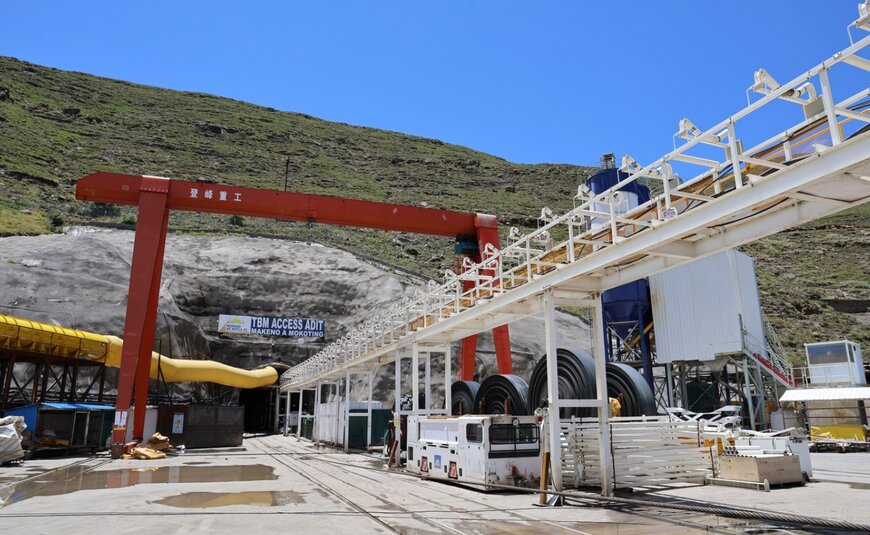
Large-scale water infrastructure projects are increasingly designed to support regional resource management and long-term supply stability. In this context, Zutari is contributing to the design and construction supervision of the Polihali Transfer Tunnel as part of the Lesotho Highlands Water Project Phase II.
A 34 km underground link between reservoirs
The Polihali Transfer Tunnel forms a 34 km underground connection between the Polihali and Katse reservoirs in Lesotho’s highlands. This link is a central element of the broader water transfer system, enabling controlled movement of water across the network.
The tunnel is designed as a hard-rock tunnel with a diameter of approximately five meters, excavated using a tunnel boring machine and lined with segmental support structures. It also includes intake works and a gate shaft upstream of the 165 meter high Polihali Dam, along with outlet structures and a lake-tap connection into the Katse Reservoir.
Additional access tunnels and supporting infrastructure are incorporated to enable both construction and long-term operational access.
Coordinating complex underground engineering
Unlike surface infrastructure, the tunnel operates entirely below ground, requiring precise alignment, geotechnical assessment, and construction planning. The project is being delivered through the Metsi a Senqu-Khubelu Consultants Joint Venture, with Zutari involved in design and construction supervision.
The scale and location of the project introduce multiple technical variables, including varying geological conditions, environmental constraints, and logistical challenges associated with construction in mountainous terrain. Managing these factors requires coordination across engineering disciplines, contractors, and stakeholders throughout the project lifecycle.
Role within a bi-national water system
The Lesotho Highlands Water Project is a multi-phase initiative between Lesotho and South Africa, implemented by the Lesotho Highlands Development Authority. The system combines dams, tunnels, and associated infrastructure to transfer water from Lesotho’s highlands to South Africa while supporting hydropower generation.
Within this system, the Polihali Transfer Tunnel functions as a critical conduit, enabling efficient redistribution of water between reservoirs. This supports both water supply reliability and operational flexibility across the network.
Infrastructure impact on regional water security
The tunnel contributes to long-term water security by increasing system capacity and improving resource management across national boundaries. For South Africa, it supports water supply to key economic regions, while for Lesotho, the project generates economic benefits through infrastructure development, royalties, and employment.
Such projects also create opportunities for collaboration between international engineering firms and local professionals, contributing to knowledge transfer and technical capacity development within the region.
Engineering collaboration in large-scale projects
The implementation of the tunnel reflects the role of coordinated engineering partnerships in delivering complex infrastructure. Projects of this scale require integration of design, environmental management, and construction processes to ensure long-term performance and compliance.
Although the tunnel will remain largely unseen once completed, it will serve as a core component of the LHWP Phase II system, supporting efficient water transfer and reinforcing regional infrastructure resilience.
Edited by Aishwarya Mambet, Induportals Editor, with AI assistance.
www.zutari.com
