
www.waterplant.tech
17
'26
Written on Modified on
Synchronous belt drive improves grit chamber reliability
Smith & Loveless Inc. introduces maintenance-optimized drive technology for wastewater treatment systems to enhance operational efficiency and reduce lifecycle servicing demands.
www.smithandloveless.com
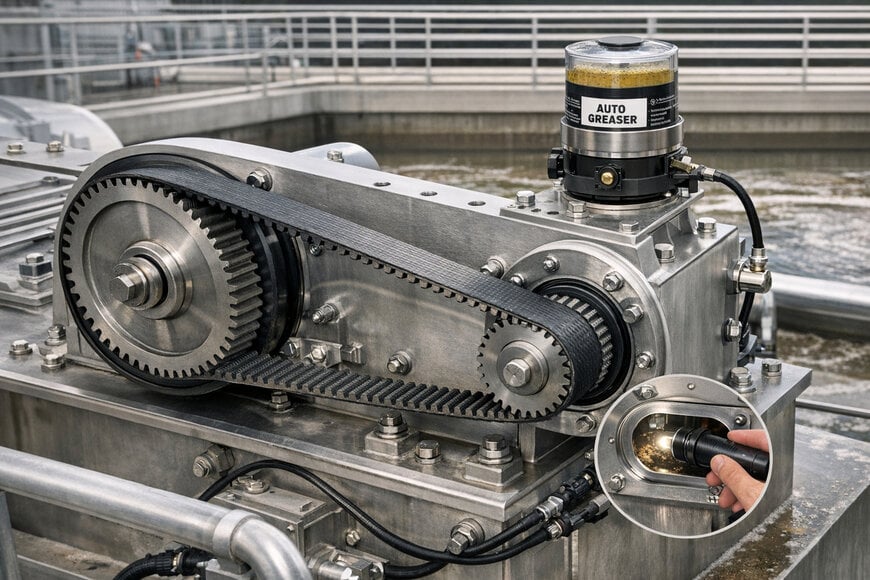
A new synchronous belt drive system for grit chamber applications replaces conventional oil-based gear drives with a low-maintenance, grease-lubricated alternative. The technology is designed for wastewater treatment facilities seeking improved reliability and reduced servicing requirements in continuous-operation environments.
Transition from oil-based gear drives
The newly introduced drive system eliminates the oil bath typically required in gear-driven mechanisms. This removes the need for oil inspection, refilling, replacement, and disposal tasks that contribute to routine maintenance overhead and operational risk in treatment facilities.
By adopting a grease-lubricated synchronous belt configuration, the system avoids common issues such as overfilling, contamination, and unplanned downtime associated with oil-based drive systems. The result is a simplified maintenance workflow aligned with increasingly automated plant operations.
Material design and power transmission characteristics
The drive incorporates a toothed synchronous belt manufactured from hydrogenated nitrile butadiene rubber (HNBR) combined with a high-tensile carbon fiber core. This material combination provides:
- High resistance to wear and chemical exposure typical in wastewater environments
- Stable belt tension over extended operating cycles
- Consistent torque transmission without slippage
These characteristics support predictable performance and reduce the frequency of component replacement, which is critical for facilities operating under continuous load conditions.
Compatibility with existing grit chamber systems
The system is engineered for both new installations and retrofit applications. It maintains the same anchor bolt pattern as existing drive configurations, enabling integration without structural modifications.
This compatibility extends across multiple grit chamber configurations, allowing operators to upgrade legacy systems without redesigning plant layouts. Such retrofit capability supports gradual modernization strategies within a digital supply chain, where infrastructure upgrades are implemented incrementally.
Operator-focused design features
Several design elements improve accessibility and routine inspection processes. These include an automatic greasing mechanism for the slewing ring and multiple inspection ports that allow direct visual monitoring of belt condition.
These features reduce the need for disassembly during inspections and support condition-based maintenance approaches, where servicing is performed based on observed wear rather than fixed schedules.
Application in wastewater treatment operations
Grit removal systems play a critical role in protecting downstream equipment by removing abrasive particles from influent wastewater. Drive system reliability directly affects system uptime and treatment efficiency.
By reducing maintenance intervals and simplifying servicing procedures, the synchronous belt drive contributes to:
Compatibility with existing grit chamber systems
The system is engineered for both new installations and retrofit applications. It maintains the same anchor bolt pattern as existing drive configurations, enabling integration without structural modifications.
This compatibility extends across multiple grit chamber configurations, allowing operators to upgrade legacy systems without redesigning plant layouts. Such retrofit capability supports gradual modernization strategies within a digital supply chain, where infrastructure upgrades are implemented incrementally.
Operator-focused design features
Several design elements improve accessibility and routine inspection processes. These include an automatic greasing mechanism for the slewing ring and multiple inspection ports that allow direct visual monitoring of belt condition.
These features reduce the need for disassembly during inspections and support condition-based maintenance approaches, where servicing is performed based on observed wear rather than fixed schedules.
Application in wastewater treatment operations
Grit removal systems play a critical role in protecting downstream equipment by removing abrasive particles from influent wastewater. Drive system reliability directly affects system uptime and treatment efficiency.
By reducing maintenance intervals and simplifying servicing procedures, the synchronous belt drive contributes to:
- Lower operational downtime
- Reduced maintenance labor requirements
- Improved long-term cost predictability
The introduction of belt-driven technology reflects a broader shift toward simplified mechanical systems in wastewater infrastructure, where durability and ease of maintenance are prioritized alongside performance.
Position within existing drive technologies
Compared with conventional gear drives, synchronous belt systems offer fewer lubrication dependencies and reduced mechanical complexity. While gear drives remain suitable for high-load applications requiring enclosed lubrication, belt-driven systems provide advantages in environments where maintenance accessibility and operational simplicity are critical performance criteria.
Edited by an industrial journalist Sucithra Mani with AI assistance.
www.smithandloveless.com
Position within existing drive technologies
Compared with conventional gear drives, synchronous belt systems offer fewer lubrication dependencies and reduced mechanical complexity. While gear drives remain suitable for high-load applications requiring enclosed lubrication, belt-driven systems provide advantages in environments where maintenance accessibility and operational simplicity are critical performance criteria.
Edited by an industrial journalist Sucithra Mani with AI assistance.
www.smithandloveless.com
