
www.waterplant.tech
06
'26
Written on Modified on
Pump Station Controller Simplifies Wastewater Monitoring
Smith & Loveless Inc. introduces an HMI-ready pump station control platform for wastewater and stormwater infrastructure with standardized configuration and remote monitoring support.
www.smithandloveless.com
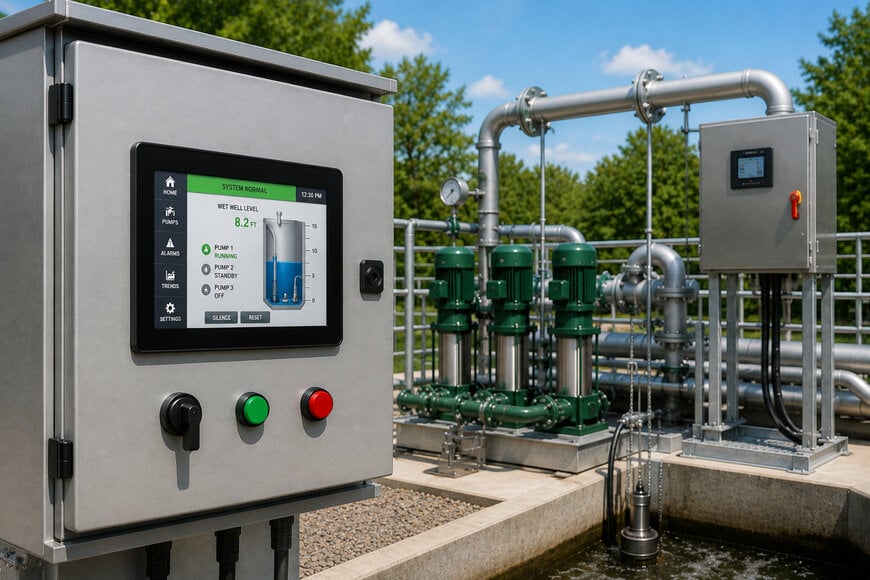
Smith & Loveless Inc. has introduced the PumpLogix Plus Pump Station Controller, a standardized control platform designed for above-ground duplex and triplex pump station applications in wastewater and stormwater systems. The controller integrates touchscreen human-machine interface functionality, remote monitoring compatibility, and variable frequency drive control into a single platform intended to reduce retrofit complexity and long-term operational costs.
The release targets municipal wastewater utilities, industrial facilities, rural sewer collection networks, military bases, commercial developments, and national park infrastructure where aging relay logic control panels continue to limit operational visibility and maintenance efficiency. The system expands the company’s digital supply chain approach to pump station modernization by standardizing control architecture across multiple installation types.
Standardized Control Architecture for Pump Stations
PumpLogix Plus was developed as an upgrade platform for existing Smith & Loveless relay logic control panels. The controller supports both two-pump and three-pump configurations through integrated input and output capacity, eliminating the need for customized panel modifications in many retrofit applications.
The platform includes a front-mounted touchscreen LCD graphical interface that provides real-time operational visibility and navigation through built-in help screens. Operators can monitor approximate wet well levels using an integrated simulation display intended to improve situational awareness during station operation and maintenance.
Standard control functions include four relay outputs supporting pump sequencing and station alarm management. The controller also incorporates a level transducer with backup float capability to maintain operational redundancy in the event of sensor failure.
Variable Frequency Drive Integration
The controller can interface with variable frequency drives to regulate pump speed according to wet well levels. This configuration enables responsive flow management and may reduce unnecessary pump cycling in wastewater collection systems.
Variable frequency drive integration is increasingly used in pump station automation to improve energy efficiency and reduce mechanical wear on pumping equipment. By adjusting motor speed according to incoming flow conditions, operators can maintain more stable wet well operation while lowering stress on pumps and electrical components.
The platform’s HMI-ready design also supports easier operator interaction compared with conventional relay-based control panels, particularly in decentralized wastewater infrastructure where maintenance personnel may oversee multiple remote stations.
Remote Monitoring and Environmental Protection
PumpLogix Plus is compatible with the company’s RemoteView monitoring platform, allowing operators to remotely access system status and troubleshoot pump stations without onsite intervention. Remote diagnostics can reduce response times during alarm conditions and minimize maintenance-related downtime across distributed wastewater networks.
The controller is rated NEMA 4/4X, meeting enclosure protection standards commonly specified for wastewater and stormwater lift station electrical equipment exposed to moisture, corrosion, and outdoor operating environments.
Above-ground pump station configurations supported by the controller can also improve maintenance accessibility and operator safety compared with below-ground electrical installations.
Applications Across Water Infrastructure
Smith & Loveless positioned the controller for use in municipal and industrial pumping applications requiring standardized automation and simplified maintenance procedures. Typical deployment areas include wastewater lift stations, stormwater pumping systems, commercial developments, and industrial process water infrastructure.
The release reflects broader movement within the automotive data ecosystem and industrial infrastructure sectors toward standardized digital control platforms capable of supporting remote monitoring, predictive maintenance, and lower life-cycle operating costs.
Edited by an industrial journalist Sucithra Mani with AI assistance.
www.smithandloveless.com
