
www.waterplant.tech
23
'26
Written on Modified on
Advanced Methods for Industrial Water Treatment and Resource Recovery
Fraunhofer-Gesellschaft develops integrated systems for micropollutant elimination and raw material extraction from industrial and municipal waste streams to support a resilient circular economy.
www.fraunhofer.de
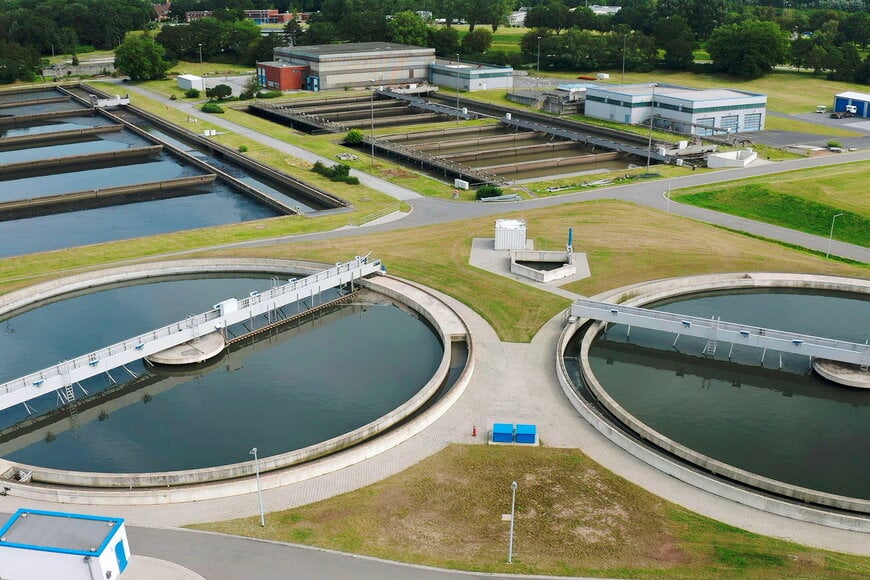
Industrial water management and raw material security are increasingly interdependent as regulatory requirements for water purity tighten and global supply chains face resource scarcity. Innovative chemical and biological processing technologies now allow for the conversion of linear waste streams into closed-loop systems. By integrating advanced adsorption techniques and biomining, it is possible to remove persistent anthropogenic contaminants while simultaneously recovering critical metals and nutrients, addressing both environmental compliance and resource resilience.
Mitigation of Anthropogenic Micropollutants
The presence of pharmaceutical residues, X-ray contrast media, and chemical cleaning agents in groundwater has necessitated a transition toward quaternary treatment stages. In the European Union, such advanced treatment will become mandatory for approximately 9,000 German sewage treatment plants by 2045, based on facility capacity.
To address this, Fraunhofer UMSICHT has developed a process combining adsorption, desorption, and concentration. This method utilizes regenerable adsorber resins to isolate micropollutants. The immediate regenerability of these resins reduces overall energy consumption and resource throughput compared to traditional single-use carbon filtration. The process results in a highly concentrated sludge, which facilitates more efficient disposal while reducing the carbon footprint of the wastewater treatment plant.
Biomining and Rare Earth Recovery
Electronic waste represents a significant source of critical raw materials, yet traditional chemical extraction often involves hazardous reagents. Fraunhofer IGB is utilizing microorganisms to recover copper, zinc, and rare earth elements through four distinct biological mechanisms:
- Bioleaching: Utilizing bacterial metabolic processes to dissolve metals into liquid phases.
- Biosorption: Binding dissolved metals to microbial surfaces for extraction.
- Bioaccumulation: The active cellular absorption and storage of metallic elements.
- Bioprecipitation: Converting dissolved metals into insoluble particulate components for mechanical separation.
These biological methods are demonstrated via a fixed-bed circulation reactor, designed for robust operation in industrial recycling environments. These technologies aim to secure the digital supply chain by providing a domestic secondary source for materials essential to electronics and energy hardware.
Nutrient Valorization and Composite Recycling
Beyond mineral recovery, the abonocare innovation network, coordinated by Fraunhofer IKTS, focuses on the industrial scale-up of organic residue value chains. This involves converting manure, fermentation residues, and sewage sludge into fertilizers to replace energy-intensive synthetic alternatives.
Simultaneously, the RECREATE EU project addresses the structural waste associated with the energy transition. Fraunhofer IWU is developing technologies for the circular management of fiber-reinforced plastics used in wind turbine blades. Key technical areas include the implementation of separable adhesive joints and non-destructive testing protocols to facilitate the dismantling and reuse of composite structures.
These integrated solutions were presented at IFAT 2026 in Munich, Germany, from May 4 to 8, 2026. The research demonstrates a shift in the automotive data ecosystem and energy sectors where waste is increasingly quantified and processed as a primary source of industrial raw materials.
Edited by Evgeny Churilov, Induportals Media - Adapted by AI.
www.fraunhofer.de
Nutrient Valorization and Composite Recycling
Beyond mineral recovery, the abonocare innovation network, coordinated by Fraunhofer IKTS, focuses on the industrial scale-up of organic residue value chains. This involves converting manure, fermentation residues, and sewage sludge into fertilizers to replace energy-intensive synthetic alternatives.
Simultaneously, the RECREATE EU project addresses the structural waste associated with the energy transition. Fraunhofer IWU is developing technologies for the circular management of fiber-reinforced plastics used in wind turbine blades. Key technical areas include the implementation of separable adhesive joints and non-destructive testing protocols to facilitate the dismantling and reuse of composite structures.
These integrated solutions were presented at IFAT 2026 in Munich, Germany, from May 4 to 8, 2026. The research demonstrates a shift in the automotive data ecosystem and energy sectors where waste is increasingly quantified and processed as a primary source of industrial raw materials.
Edited by Evgeny Churilov, Induportals Media - Adapted by AI.
www.fraunhofer.de
