
www.waterplant.tech
30
'26
Written on Modified on
LG Sonic MPC-Buoy improves water quality in Chilmark Pond
Ultrasonic algae control and real-time monitoring accelerate cyanobacteria reduction and support restoration of recreational water use.
www.lgsonic.com
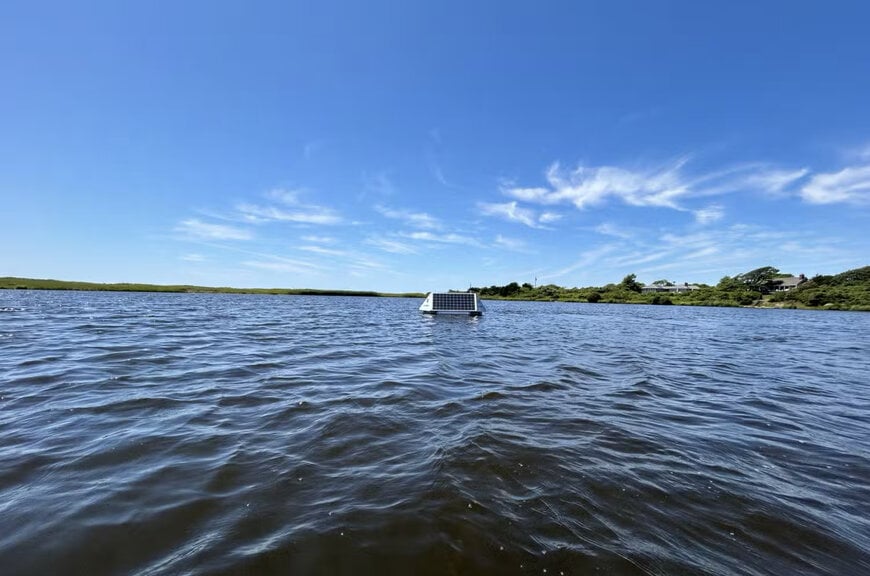
The deployment of the MPC-Buoy by LG Sonic at Chilmark Pond has resulted in accelerated control of harmful algal blooms, combining real-time monitoring with ultrasonic algae prevention to improve water quality in a coastal lagoon environment.
Independent monitoring by Great Pond Foundation confirmed that bloom dissipation was achieved in 8 days during the 2025 season, compared to 29 days observed in 2022 without intervention.
Bloom control through monitoring and ultrasonic technology
The MPC-Buoy system integrates continuous water quality monitoring with targeted ultrasonic algae control. The platform records parameters such as temperature, pH, dissolved oxygen, and chlorophyll-a at 30-minute intervals, enabling real-time tracking of bloom dynamics.
The ultrasonic technology emits frequency-specific pulses that disrupt gas vesicles in cyanobacteria, limiting their ability to regulate buoyancy. This prevents cells from accessing surface light and nutrient-rich zones required for rapid proliferation. The approach avoids chemical treatment and does not lyse cells, reducing the risk of toxin release.
Measured improvement in bloom dynamics
Data collected during the 2025 season showed a bloom dissipation rate of approximately 11.44 micrograms per liter per day, compared to historical rates of 2–3 micrograms per liter per day. In addition to faster reduction, the phytoplankton composition shifted from toxin-producing cyanobacteria to non-toxic species such as green algae and diatoms.
This shift indicates improved ecological balance and reduced public health risk.
Integration with broader water management measures
The improvement in water quality was supported by additional interventions. Sediment dredging removed approximately 6,000 cubic yards of nutrient-rich material, while controlled opening of the pond inlet enabled extended saltwater exchange.
The combination of nutrient reduction, hydrological management, and ultrasonic prevention contributed to the observed results, demonstrating the effectiveness of integrated water management strategies.
Operational factors influencing performance
The MPC-Buoy was deployed in July 2025 at a location corresponding to historical bloom formation zones. Continuous monitoring enabled adaptive management based on real-time conditions rather than periodic sampling.
Future deployment is planned earlier in the season to prevent bloom formation before peak conditions, improving overall system effectiveness.
Impact on community use and water management
Improved water quality enabled the return of recreational activities, including swimming, which had previously been restricted due to cyanobacteria-related advisories. The results demonstrate how combining monitoring and non-chemical intervention technologies can support restoration of water bodies affected by nutrient loading.
The case of Chilmark Pond shows how LG Sonic’s MPC-Buoy technology can be applied to improve water quality outcomes in both coastal and inland water systems.
Edited by Natania Lyngdoh, Induportals Editor — Adapted by AI.
www.lgsonic.com
