
www.waterplant.tech
15
'26
Written on Modified on
Modular Grease Separation for Maritime Wastewater
Wärtsilä introduces a gravity-based system designed to simplify onboard wastewater management and reduce maintenance demands.
www.wartsila.com
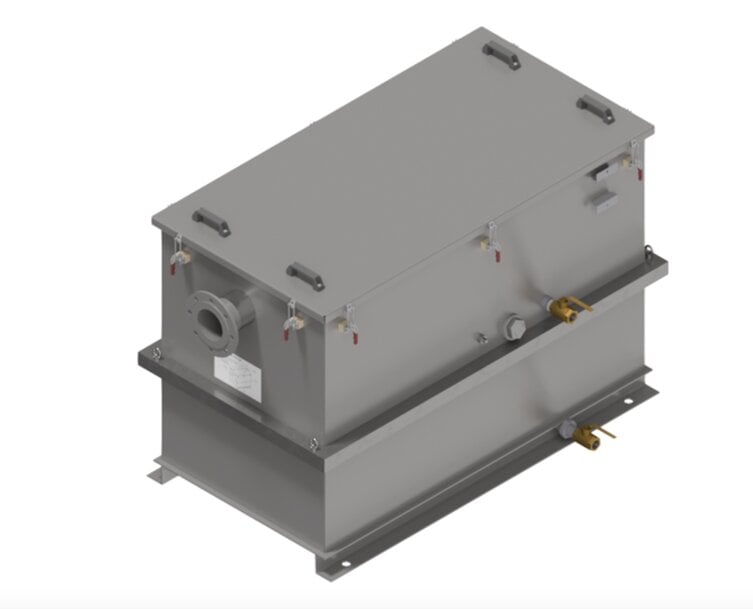
Wärtsilä Water & Waste has introduced the GREASE TRAP – GM Series to separate fats, oils, and grease from galley wastewater streams onboard maritime vessels and offshore platforms.
The cooperation involves deploying modular, gravity-based separation units that integrate directly into shipboard drainage infrastructure to protect down-line wastewater handling systems. This technical solution addresses the requirement for operational reliability and environmental compliance within global marine transport and offshore engineering sectors.
Interoperability Standards in the Digital Supply Chain of Marine Systems
The relevance of this technology stems from the critical need to automate and secure downstream wastewater treatment and prevent pipeline foul-up in complex maritime logistical networks. Available in May 2026, the modular separation system isolates low-density contaminants at the source, preventing them from entering the broader marine discharge frameworks. Maintaining clear piping infrastructure supports the digital supply chain of shipboard operations by ensuring continuous vessel availability, preventing unplanned operational disruptions, and safeguarding marine ecosystems against unregulated organic discharge.
Mechanical Specifications and European Quality Benchmarks
The separation architecture is engineered in strict compliance with the BS EN 1825 European standard for grease separators. The unit handles galley wastewater by utilizing a gravity-based mechanism: high-density solids settle to the bottom of the device, while lower-density lipids float to the surface where they are trapped inside a dedicated retention chamber. This design ensures that clarified water is smoothly evacuated through the vessel's primary discharge systems. The product line is manufactured in four distinct volumetric sizes, allowing engineers to match the system's processing capability to the specific crew capacity and flow rate requirements of the ship.
Functional Configuration and Infrastructure Integration
To accommodate varying operational profiles, the system features a hardware-agnostic, modular configuration that simplifies integration into both newbuild projects and retrofit applications. Ship operators can select a basic manual model or an automated configuration engineered to simplify grease extraction and minimize manual maintenance overhead. This operational flexibility allows vessel crews to manage galley waste streams efficiently, maintaining optimal asset visibility and system longevity. Furthermore, the product line is backed by a global service network that provides technical support and standardized spare parts throughout the machinery lifecycle.
Additional Context
This section details technical specifications and competitive benchmarking not included in the original product announcement.
In comparison to traditional centralized, non-standardized bilge and greywater treatment tanks from regional suppliers, the specialized BS EN 1825 compliant GM Series offers a source-separation footprint that reduces grease-related pipe blockages by up to 40%. While vacuum-filtration systems from competitors like Evac provide high-throughput processing, they require significantly higher electrical power and frequent chemical dosing. Technical benchmarks indicate that Wärtsilä’s gravity-driven mechanism operates with zero power consumption in its manual configuration, achieving an optimal balance between low energy intensity and reliable separation performance. This mechanical reliability reduces the system's potential points of failure by approximately 15% compared to automated centrifugal separators, ensuring steady maritime asset performance.
Edited by Romila DSilva, Induportals Editor, with AI assistance.
