
www.waterplant.tech
06
'26
Written on Modified on
Strategic Infrastructure and Financial Frameworks for Global Water Reuse
Veolia and international stakeholders outline macroeconomic tools and modular technologies to mitigate the projected 40% freshwater deficit by 2030.
www.veoliawatertechnologies.com
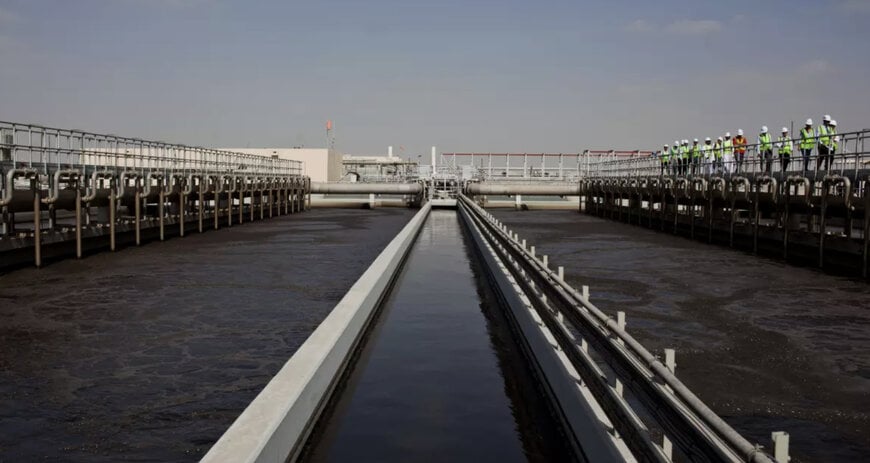
Water security has transitioned into a core strategic liability for industrial and municipal operations worldwide, directly impacting economic competitiveness, sovereign supply chains, and public health frameworks. With global freshwater demand projected to outstrip available supply by 40% by 2030, the macroeconomic landscape faces unprecedented asset-level risks. Despite the mature state of modern filtration and treatment technologies, only 8% of the world's wastewater is currently reclaimed, an underutilization primarily driven by regulatory misalignment, fragmented financial incentives, and psychological barriers to adoption.
The Stakeholders Assembly and Strategic White Paper
To accelerate the transition from linear water consumption to closed-loop recycling infrastructure, Veolia convened its newly formed Stakeholders Assembly—a coalition of 34 international experts encompassing economists, industrial manufacturers, insurers, and public policymakers. The Assembly has published a comprehensive white paper detailing ten actionable proposals designed to unlock the financial and strategic valuation of water reuse. A central component of this framework is the implementation of an optimal supply mix model, which evaluates regional constraints and localized industrial requirements to seamlessly integrate recycled water alongside conventional freshwater resources.
According to Anne Le Guennec, CEO of the Water Technologies Zone at Veolia, water has escalated into a matter of critical industrial and environmental security. She notes that stakeholders must shift away from linear models and treat water as a renewable resource, allowing industries and local authorities to leverage a diversified mix of fresh and recycled water to sustain critical operations.
Financial Quantification Tools and Global Governance
To translate resource risks into tangible metrics for public and financial decision-makers, Veolia is spearheading the development of an open-source analytical tool scheduled for deployment by the end of 2026. This digital platform will calculate the "cost of no water," allowing organizations to quantify the precise financial exposure, operational downtime, and balance-sheet vulnerability associated with supply interruptions. The development process leverages cross-sector expertise from assembly members, including water economist Esther Crauser-Delbourg, Aon Insurance, and Natixis CIB.
Concurrently, the Assembly is lobbying for a formalized, recurring United Nations Water Conference—structured similarly to global climate and biodiversity summits. This initiative aims to standardize international water governance and establish reuse targets as a core pillar of the global environmental agenda. Esther Crauser-Delbourg emphasizes that climate volatility requires a fundamental restructuring of water tariffs and economic tools to properly reflect the resource's value and ensure targeted, regionalized distribution.
Industrial Deployment and Proprietary Technology Scalability
Veolia continues to scale tailored water reuse infrastructure across industrial and municipal sectors globally, with over twenty-five years of operational deployment in high-stress regions including Chile, Spain, Namibia, and the Middle East. A key operational driver in Europe is the proprietary ReutBox technology, a series of compact, mobile treatment units deployed in France since 2022. These modular systems enable wastewater treatment plants to operate via closed-loop cycles, generating high-quality recycled water for agricultural irrigation, street cleaning, and municipal maintenance without drawing from local aquifers.
Currently operational or slated for installation across more than fifty facilities, this technology supports large-scale agricultural projects. Notable deployments include a cutting-edge treated wastewater installation for vineyard irrigation in Narbonne, alongside France's largest water reuse installation in Argelès, designed to secure a reliable supply for local crop production. These field deployments validate that technological solutions are commercially viable and capable of stabilizing industrial and municipal supply chains against escalating environmental volatility.
Edited by Maria Brueva, Induportals editor – adapted by AI.
www.veolia.com
