
www.waterplant.tech
13
'26
Written on Modified on
LG Sonic Ultrasound Technology Secures Water Intake Quality in Colombia
By implementing advanced autonomous monitoring and ultrasonic treatment, LG Sonic effectively eliminates harmful algal blooms at Colombian river intakes, ensuring sustainable, chemical-free drinking water production.
www.lgsonic.com
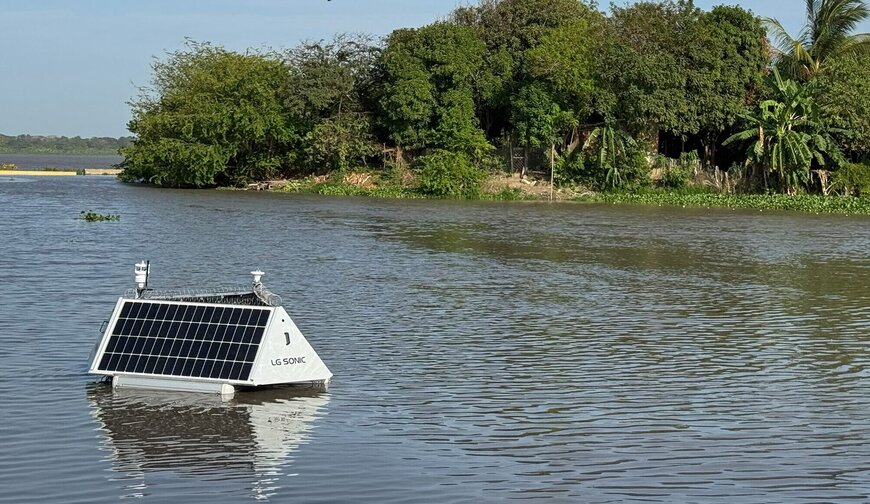
Triple A S.A. E.S.P. has recently modernized its water pretreatment strategy at the Dársena Río Magdalena by installing two MPC-Buoys, a move that distinguishes its utility management from traditional chemical-heavy approaches. While many providers rely solely on post-collection filtration and high-dose chlorination to manage water quality, Triple A has implemented LG Sonic’s ultrasonic technology to neutralize algae at the source. This proactive intervention directly addresses the limitations of conventional sediment basins, where stagnant conditions often trigger biological growth that compromises the taste, odor, and clarity of the regional water supply.
The Limitations of Traditional Intake Basins
The Magdalena River serves as the primary freshwater artery for Barranquilla and 15 surrounding municipalities. To manage the river's heavy sediment and wastewater runoff, utilities use semi-enclosed basins like the Dársena Río Magdalena to allow particles to settle. However, these calm waters frequently become breeding grounds for algae. Unlike standard treatment methods that react to algae once it enters the plant, the deployment of MPC-Buoys allows Triple A to maintain water quality before the intake pumps are even engaged. This reduces the reliance on aggressive chemical dosing, which is a common pain point for consumers who notice the resulting "chemical" taste in their tap water.
Ultrasonic Wave Technology vs. Chemical Treatment
The core differentiator of the MPC-Buoy system lies in its mechanical rather than chemical mechanism of action. Each buoy emits specific ultrasonic frequencies that disrupt the buoyancy of algae cells, causing them to sink and decompose naturally without releasing toxins or harming the surrounding aquatic ecosystem. By integrating real-time water quality monitoring, the system provides a level of data precision that traditional manual testing cannot match. This allows the utility to adjust to environmental changes—such as heavy rainfall or increased sediment loads—instantly, ensuring that the water reaching the treatment facilities is already of a higher baseline quality.
Operational Efficiency and Consumer Benefits
By controlling biological growth at the river intake, Triple A effectively bypasses the frequent maintenance cycles required by traditional systems. Algae accumulation in large settling tanks typically necessitates regular shutdowns for manual cleaning, which spikes operational costs and disrupts service. The ultrasonic solution mitigates this buildup, leading to fewer cleanouts and a significant reduction in the chlorine required for final disinfection. For the residents of Barranquilla and Soledad, this technological shift translates to a more reliable water supply that meets aesthetic and safety standards without the sensory drawbacks of over-processed water.
Edited by an industrial journalist, Evgeny Churilov
www.lgsonic.com
